Measurement and Reasonable Solutions

Screen Shot 2019-05-15 at 8.38.35 PM

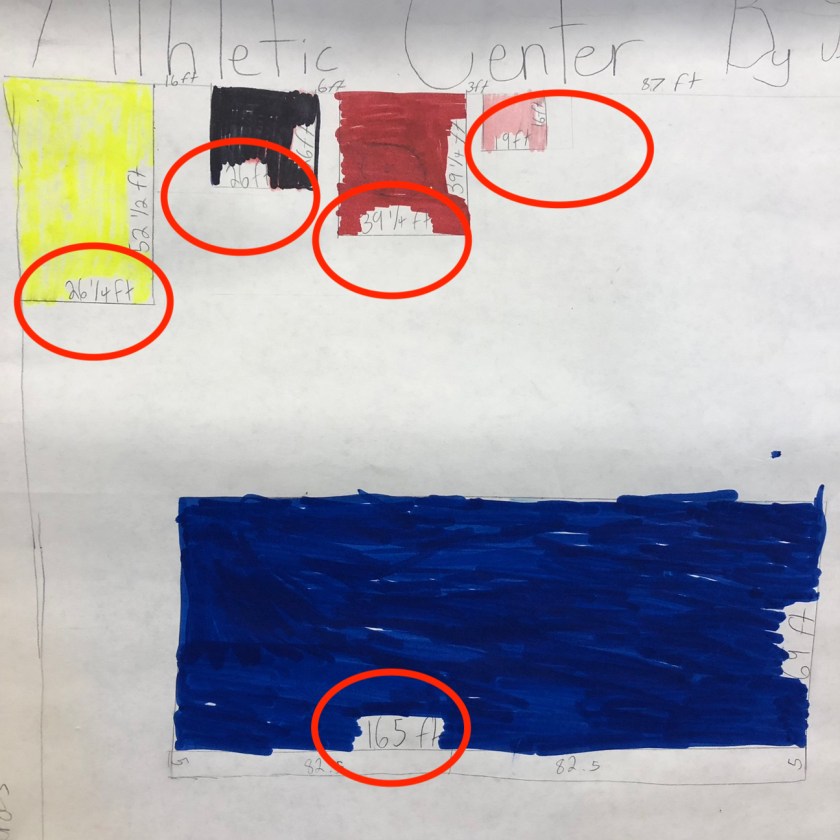
My fourth grade students finished up a project involving area last week.  Students were asked to find the area of different playing areas for certain sports.  They first calculated the areas of the playing field by multiplying fractions and then found the product.

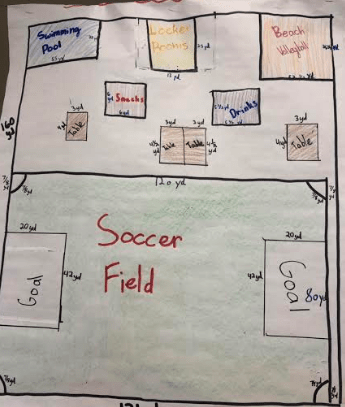
The next step involved creating a visual model on anchor chart paper.  Students worked in groups to put together their athletic park involving the field areas.  They were given the area of the park and then had to place the fields where they wanted according to the team’s decision.  Students also added additional facilities for their athletic field and then presented their projects to the class.

While presenting, students in the audience were required to either 1) ask a question or 2) provide a constructive comment.  Most of the questions that were asked related to why certain fields were placed in specific areas on the field.  One question stood out more than the others … does the distance make sense?
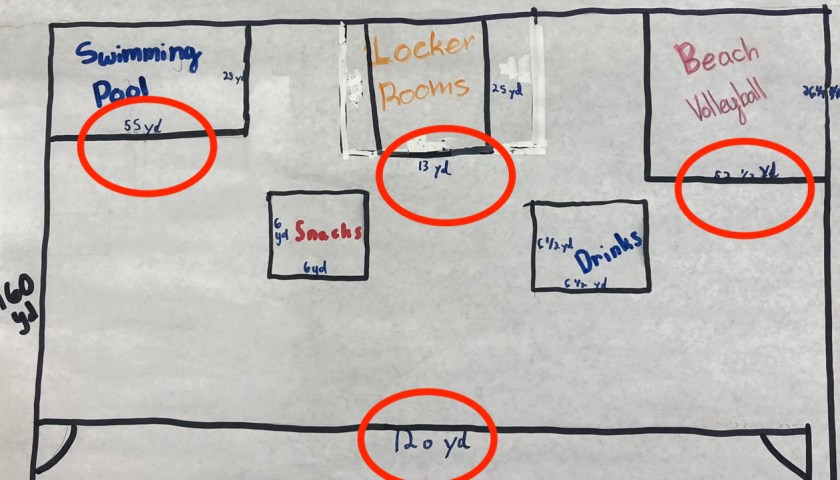
image2.jpg
The locker rooms had to be adjusted (see whiteout) as one student said, “It doesn’t make sense so I changed it to match the 120 yd.”


image1.jpg

Students were looking at the length of the fields and observing whether it was reasonable or not compared to the total length.  The class then had a conversation about the terms reasonableness and proportions.  The discussion involved how a double-number line and a grid could’ve helped visualize how the distances match.
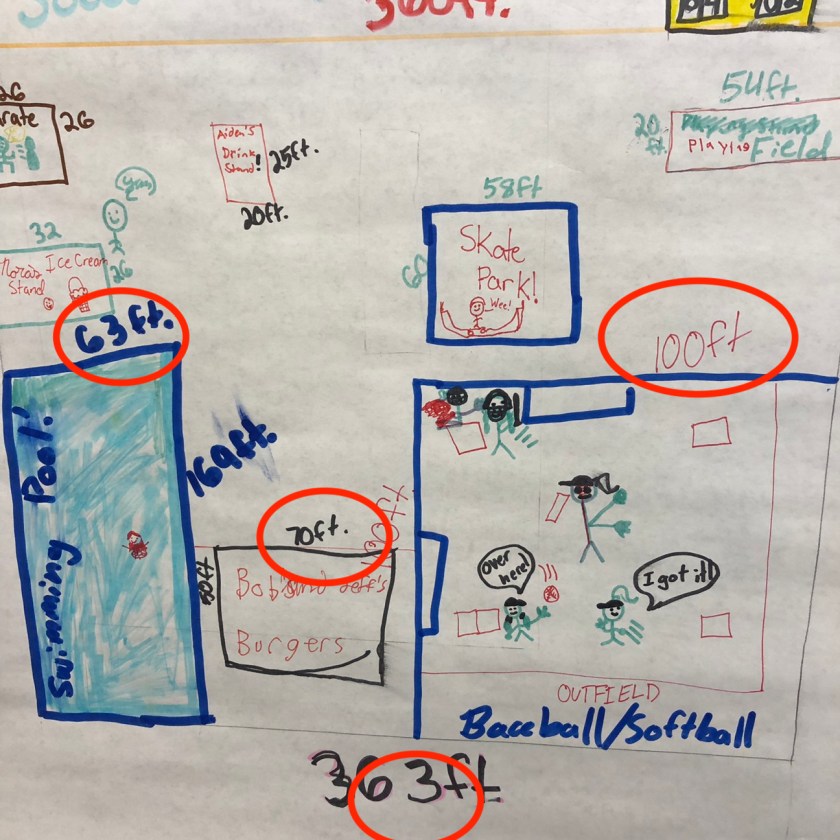
image3.jpg

I’m hoping to revisit this idea during the next few weeks as the school year finishes up.


Reflections and Math Routines


Screen Shot 2019-05-04 at 8.34.26 PM.png

This year I’ve been using number sense routines* with my 3rd-5th grade classes.  The routines have specifically been put into place to help students strengthen their place value and estimation skills.  The routines last around 5-10 minutes and generally occur during the first part of class  The routines is the first thing on the board as students enter.  Students use a template, complete the routine independently and we discuss the results and process as a class.

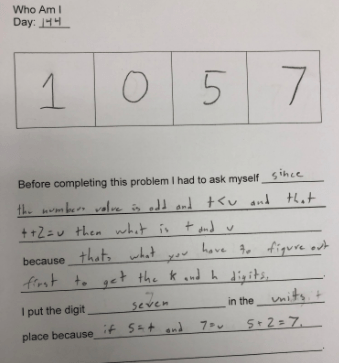
Two of the more productive routines this year have been Estimation180 (3rd grade) and Who am I (4th).  Both ask students to use hints or models and then use those visualizations to solve problems.  Students document their thinking on an individual page and then we discuss it as a class through a debrief session.  While working with students this year I noticed that not all students participated to the extend that I’d like.  The conversations were decent and students were engaged, but the reflection piece wasn’t as thorough.  So this year I’ve decided to add an individual reflection component for these specific tasks.  The reasoning actually came from a book that I read back in April that emphasized how sentence stems can be used to help students reflect on their mathematical thinking.


I put these sentence stems into practice and added them to a reflection sheet.  I added extra space after the “because” to help encourage students to write more about their own thinking process.

Screen Shot 2019-05-04 at 8.08.09 PM.png

Screen Shot 2019-05-04 at 8.32.41 PM.png

Students complete each one of these around 2-3 times a month.  Students complete the reflection sheet, discuss the writing with partners and eventually put them in their folders.  The sheets are revisited throughout the year to see the growth over time.


* The images from this post are from a math routines presentation on 5/3. Feel free to check out the entire presentation here.