Math Reflections in Desmos

It’s hard to believe that my school year is about 25% complete. Ask any teacher and they’ll probably say that number isn’t correct. It certainly doesn’t feel like it right now. Report cards are right around the corner followed by Zoom conferences. While thinking about conferences earlier this week I started to brainstorm a few ideas of how to help briefly communicate how students are feeling about math in relation to their achievement. I’ve used student reflections and goal setting for that in the past with moderate success. Google Form reflections have been used to showcase students’ perceptions of their understanding of certain math concepts. The data I received was useful but organizing it into a presentable format wasn’t ideal. Also, time is certainly important this year as I’m not seeing kids as much this school year and I needed a different way to collect the data. This year I decided to switch my strategy after reading @mathycathy ‘s tweet.

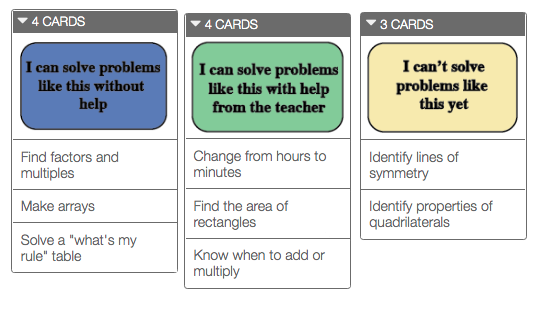
I took the idea and changed the three categories for my 3rd-5th grade students. I then took the skills associated with the test and wrote them out as a text cards. Groups of problems were categorized with certain skills. Students reviewed their digital test and dragged the cards to a category.

Students then reflected one last time to make sure each skill fit a particular category. I think most questions came from students wondering if the blue or green categories applied. There wasn’t much of a question for those in the “I can’t solve problems yet” category. Students then completed the last slide.
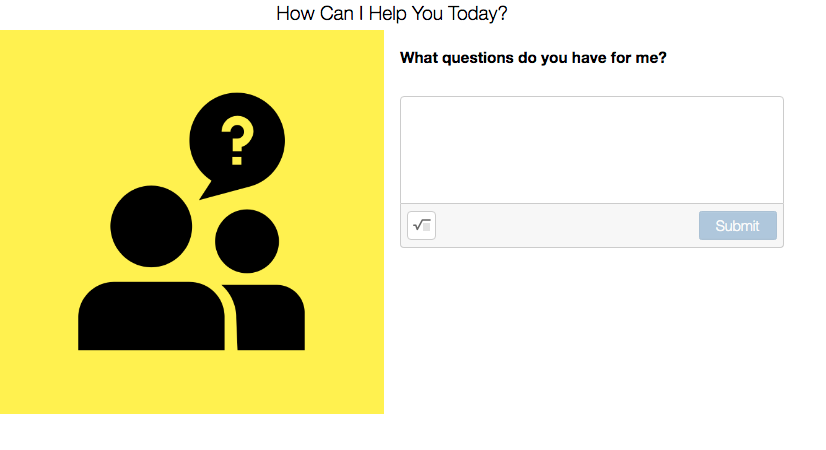
This slide is directly from Cathy’s task. If students didn’t have any questions they’d write “none at this time.” Many students wrote questions about the test. They wrote down questions about particular test questions that they might be confused about or extra help that might be needed. I was glad to see that many students advocated for themselves with this model.

I’m planning on using this during parent conferences this year over Zoom. Student perceptions are important and being able to communicate where students think they are compared to the expectation is an important piece. At some point I’d like to have students use goal setting after reviewing their assessments. I’m looking forward to seeing how this pans out with my other classes throughout the year.

Digital Student Math Reflections

My classes finished their first assessments last week. During a normal year students would use their math journals and write-up a reflection about what they explored during the unit. Obviously things are different this year. Two of my classes are currently composed of about half in-person and the rest are online. The class is split between an AM/PM model, where half the students come in the morning and the other half in the afternoon. Keeping this in mind I’ve continued to emphasize instruction towards a remote model so everyone can participate. It has taken a massive shift in allocating time to digitize resources that weren’t really meant to be digital in the first place. Tasks, assignments and student reflections are now taking a digital form.

This year I’m using Google Forms for digital unit assessment reflections. Students split their screen to view their Canvas assessment and form.

The first question asks students what they’re proud of. I want students to review some of the positive elements and connect effort to achievement.

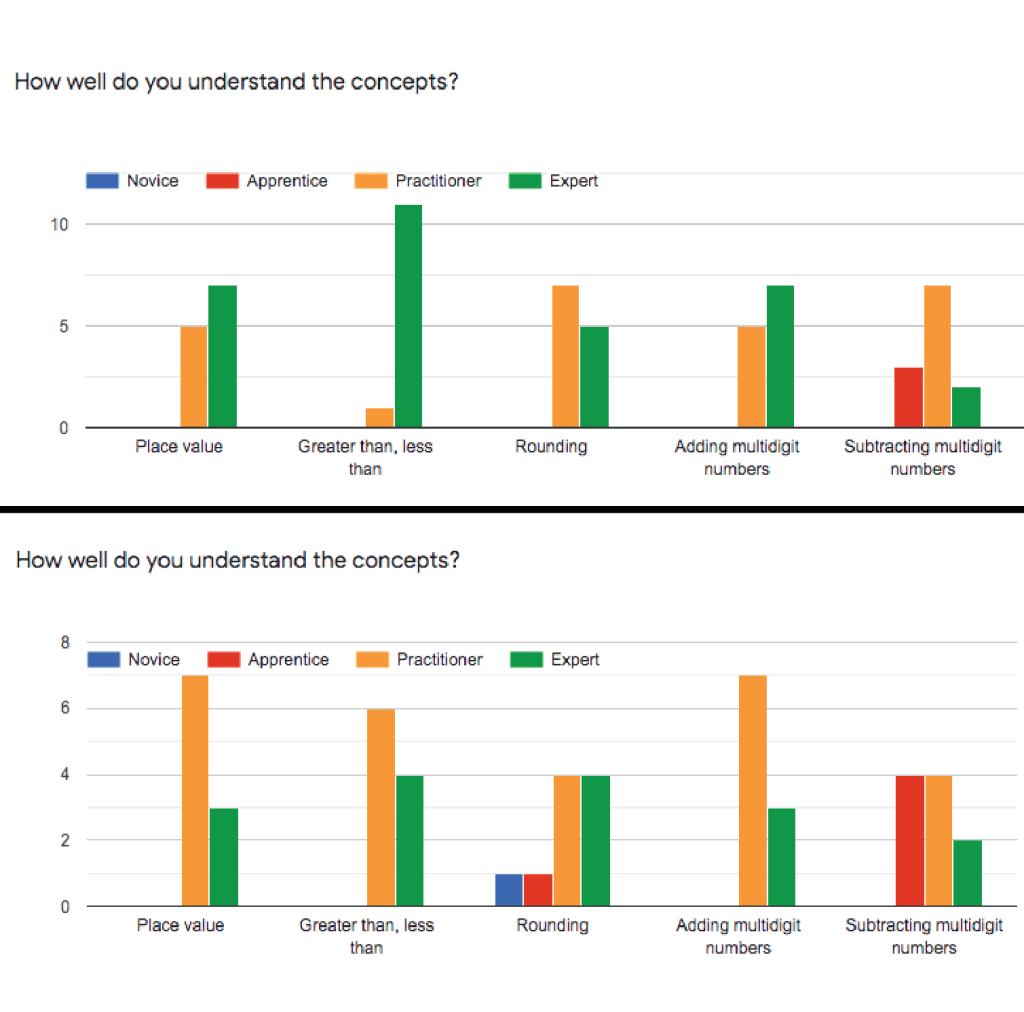
Students then review their results and specific teacher comments. I review what the words novice, apprentice, practitioner and expert mean in the context of showing an understanding of math concepts. I also expand the questions on the test through a screen share and show students problems that are related to a certain skills subset. Students spend most of their time on this part of reflection.

Students end the reflection by completing an effort question related to being prepared.

It took students about 10-15 minutes to complete this brief reflection. I shared the general results with the class and we had a great conversation about math growth overtime. What’s interesting is how the AM and PM classes differ even with the same content and instruction. Below is a fourth grade example.

I’m looking forward to adding a goal section to the next reflection. Feel free to click here to make a copy of the form.