Math Reasoning and Feedback

Image by:   J. Creationz


Having math reasoning skills is important.  Generally, math reasoning skills are taught and incorporated in early elementary school.  In math, a problem is what a student is asked and expected to answer.  If a student is unable to answer why their answer is correct, I believe that the student might not fully grasp the mathematical concept.  The student might not be utilizing math reasoning skills.

For example, a student that measures area in linear feet might not completely have an understanding that area is measured in square units.  The student could have the correct numerical answer, but include the wrong unit (centimeters compared to square centimeters).

How is mathematical reasoning taught?  I’m going to be taking a proactive step next year to give opportunities for my students to utilize math reasoning.  I’m deciding to use higher level questioning to enable students to think of the process in finding the solution.  The learning process is key.  I’ve found that math instruction isn’t always linear, just as mathematical reasoning isn’t rigid.  By asking students why/how they arrived at a solution is vital in understanding their thinking.

As I’m planning for next school year, I’ve decided to ask students to explain their reasoning more frequently.  By hearing their reasoning, I’m in a better position to give direct feedback.  All math questions have some type of reasoning.  I believe that multiple solution / open-ended questions can be used to display mathematical reasoning. Students need to be able to explain why they responded with a specific answer and what methods/connections were utilized to solve the problem.  Based on the math Common Core, students are expected to reason abstractly and quantitatively.  When students describe their mathematical process, teachers are better able to diagnose and assess a student’s current level of understanding.  Math reasoning isn’t always quantifiable, but it can be documented via journaling and other communication methods.  More importantly, teachers will be able to provide specific feedback to help a student understand concepts more clearly.  I also feel that this questioning process develops self-confidence in students and prepares them to become more responsible for their own learning.  See the chart below.

Problem –> Reasoning –> Feedback

Math and Tourist Destinations

 Image by: Janoon028


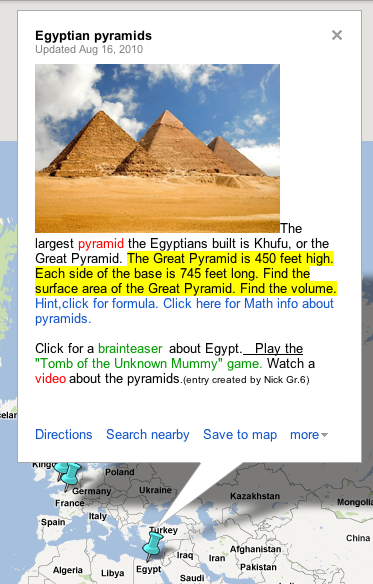
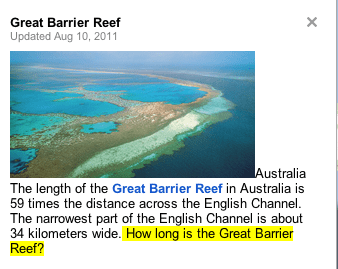
Over the past few weeks I’ve been researching math activities that integrate multiple disciplines.  After visiting a number of sites on Twitter, I found an interactive Google Map.  This activity took students to a Google Maps page that gave information about various landmarks around the world.  Not only was there a social studies connection, but the majority of student work dealt with higher level math. There were links by the questions that gave students opportunities to learn more about the landmark.  Logistically, I decided to group the students in 2 or 3 and gave one iPad/laptop to each group.  The technology was needed to visit the site and find the information.

Some of the questions were quite challenging for my students.  I overheard one student saying that since they are already on the Internet they could  look up the formula.  They asked me and I told them that was fine.  Part of this activity is exploration and finding the information for application on your own.  

This activity is somewhat like a Webquest, but a bit more guided.  Students were asked to complete all of the problems on the site.  There was an actual answer guide near the end of the page that some students found.  I reviewed the process and answers with the students after approximately 45 minutes.  The class then completed a plus/delta chart on the activity.  Overwhelmingly, the comments were positive.  I will keep this in mind as I begin planning for next school year.  Some of the pictures from this activity are below

This slideshow requires JavaScript.

Beneficial Math Homework in Elementary School

Image by: Keatti


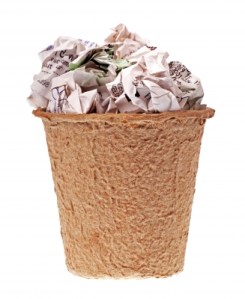
The issue of homework has been on my radar this school year.  Depending on where you teach or how involved you are in reading the research on homework effectiveness, the topic can bring out strong opinions.  Is homework truly beneficial at the elementary level?  Is homework given because it’s what the community expects? Where does all the homework go after it’s been graded? Back to the students, to the parents, shoved in a desk, in the garbage (see the picture above) … I hope not. I’m not able to answer these questions concisely.  Since I’m a math teacher, I believe that students need practice.  Generally, (I won’t speak for all teachers) homework is a form of practice, but the homework that is usually (once again, not for all teachers) assigned deals with repeated problems associated with a concept.  The problems are rarely practical and focus on repeated forms of one or two particular concepts.  If a student has a problem with the homework, the adult at home helps, they find help on the Internet, or the student doesn’t complete the homework. Regardless, the student isn’t showing mastery or showing what they have learned.  Should homework be graded?  Many education experts believe that homework isn’t beneficial at the elementary level.  I’ve found that homework is beneficial for some, but not for all.

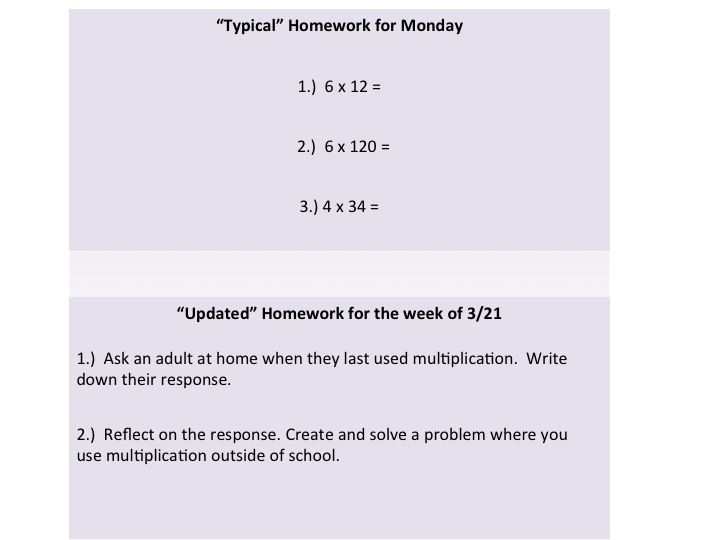
Instead of having students complete “typical” math homework every night, I’ve decided to look into an innovate approach to homework.  Instead of pages of multiple concrete math problems, the “updated” homework revolves around conversations and self-reflection.  What do I mean by this?  Here’s an example:

This is just an example, but I’m sure an educator could create multiple questions that cover an array of topics that could last for many homework sessions. Change this ideas and implement as you see fit.


So, instead of giving “typical” homework every night, the homework is assigned on a weekly basis.  The homework involves a discussion about math with an adult at home.  The discussion will be documented by the student and a self-reflection piece will be included.  Before giving this type of homework it would be a good idea to discuss this with the parents.  The idea is to connect math concepts taught in class to the practical application outside of the school. I believe that a rubric would be helpful in assessing the “updated” homework.

Math and Multiple Solutions

Image by: Krishnan


For the past few days I’ve been reviewing a math unit and have found that the lessons included have very few problems with multiple solutions.  I have nothing against one correct answer scenarios, although I feel as though students should be exposed to problems with multiple solutions.  There are cases where having one solution in math is mandatory, but there are other cases where multiple solutions are possible.  I believe the project in this blog post isn’t completely “open-ended”, although it does have multiple solutions. The concept of open-ended math is important because I believe that this idea is relevant in and outside of the classroom.  Students often seem more intrinsically motivated to complete open-ended problems, as it’s different than the norm.

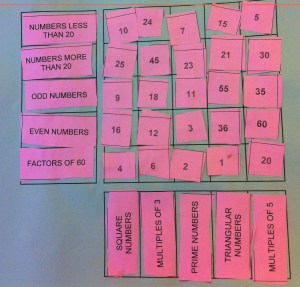
Recently, I came across a math activity designed for the upper elementary level, (although it could work at middle school) that offers multiple solutions. Since I didn’t personally create this activity, I’d like to give credit to NRICH Project for the original idea.  Multiple math concepts are found in this project.  The concepts covered in this project include a great amount of number sense concepts: factors, multiples, square numbers, even, odd, prime, composite, and triangular numbers. This assignment covers many concepts and a teacher could informally assess students in the classroom as they facilitate the learning process.

Here’s the process that I used:

1.  Download the Word documents (you can easily edit them to meet your needs).  Here is the Word file.

2.  Review the concepts of multiples, factors, square numbers, even/odd, prime/composite, and triangular numbers.

3.  Pass out the sheets to the students. (I had one of the pages a different color than the other – better for organization)

4.  Students cut out and glue the project together. (my class took approximately 30 – 40 minutes)

5.  Review the project with the students

6.  Have the students journal about their math problem solving experience.  Extension opportunities can be found here.  The reflection and assignment could be used to show growth over time and might even be useful in a student portfolio.

Here are a few possible solutions:

Additional answers may be found here.

If you use this, please let me know how this project works in your classroom.

Building Math Confidence in Elementary School

Image by:  DigitalArt 


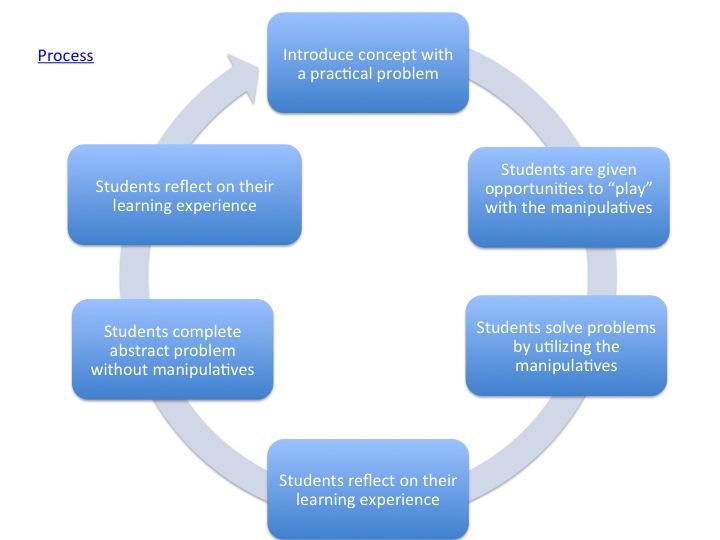
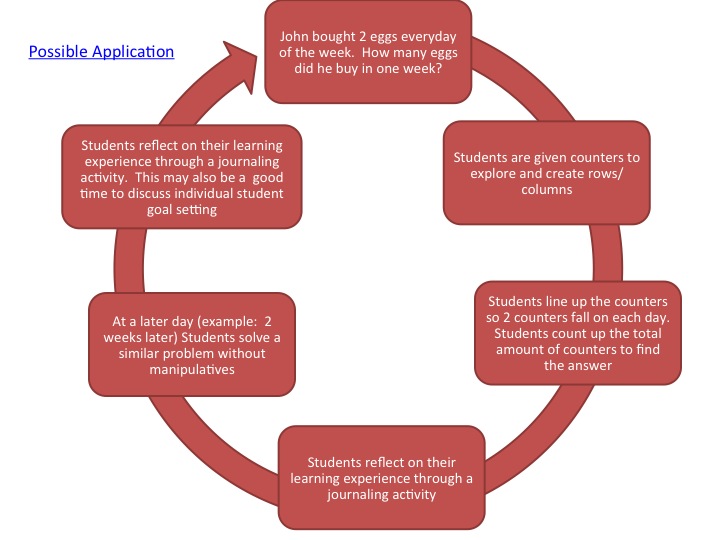
 I’ve found that math confidence often starts at a young age and develops over time.  Starting on a positive note can instill in students an appreciation for math.  Encouraging students to perceive and experience math in a positive light is important.  Elementary students typically experience math through a variety of hands-on experiences/manipulatives (base-ten blocks, geometric solids, counters, etc…) and then eventually progresses to the abstract.  The more time spent using engaging manipulatives often builds confidence, enabling the students to transfer their math understanding to abstract problems.  Building a solid mathematical foundation at the elementary level can lead to an enriching and encouraging math experience in the upper grades.  If you teach a form of math at the elementary level this concept shouldn’t be unfamiliar.  Most math in the K-5 curriculum is unveiled in a specific instructional order, as federal/state benchmarks indicate.  Publishers may suggest that math is linear, although many experts in the field disagree.   I assume that most teachers agree with a concrete/manipulative (visual representation)  –>  abstract (print) type of instruction model.

I’d like to recommend an edit in this process.  Not necessarily a change, but an addition.  Before moving straight onto the abstract, teachers should encourage students to reflect on their learning experience using manipulatives to solve math problems.  When given an opportunity to reflect on their learning, students often begin to become more responsible for their own learning.  Utilizing self-reflection math journals also allows students opportunities to connect their effort and achievement.  It may also give the teacher insight in how a particular student understands a specific concept and plan for formative assessments.  I’m not suggesting that the transfer from manipulatives to abstract should occur during the same day.  Giving ample time for math connections to fuse is important and will build a solid mathematical foundation.  I’ve found that the more engaged students are in their own learning the more opportunities that they will have to retain and apply their mathematical knowledge.  I believe the process below assists in building math confidence which will enable students to become more responsible for their own learning.  I have provided two flow charts below that may be helpful in explaining this process.

Building Math Confidence

Math and Sports

            Image by:  Idea G.


To be honest, it was a memorable Superbowl game last night.  Watching the game brought back many memories from past professional sports games, specifically the Chicago Bulls dynasty in the 1990s.  One memory that caught up with me dealt with middle school math.  I started to enjoy math in middle school.  I started to view sports as percentages, ratios, and decimals.  This started my journey in appreciating math. Most of my students watched the Superbowl and I think that this is a great opportunity to delve into statistics as well as data analysis concepts in the classroom.

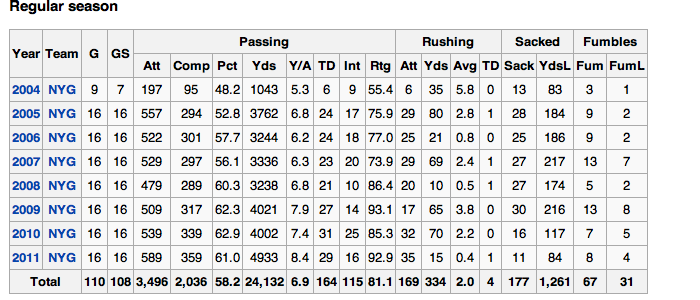
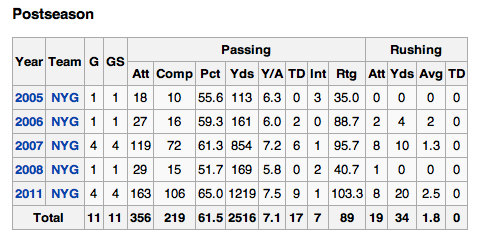
Let’s take Eli Manning as an example ….

*All of the football images and statistics were found on Wikipedia

Let’s take a look at Eli’s statistics:


Using Eli Manning’s statistics, we can view trend data.  Here are some questions to ask the students:

  • How many yards do you think Eli will pass for next year?
  • How many games do you think Eli will play next year?
  • Predict Eli’s passing rating for the 2012 season?  Explain your prediction.
  • Do you notice any trends?  If so, can you explain why the trends exist?

After asking the questions above, we can take a gander at Eli’s post season statistics.

  • Compare Eli’s regular season and post season performances.
  • What differences do you see in the data?
  • What do you think contributes to a quarterback rating.  Why?
  • Using the data, what factors do you think impact a quarterback rating?
After discussing the questions, you may want to have a conversation how statistics often relate to percentages.

Additional Sports and Math Links:

Dice Game

NFL Probability

Math and Football

Incorporating Sports into Math

Velocity in Sports

Math in Sports PowerPoint

Math and Sports Webquest

Wanted: Math Skills for Discounts

             Image by:  A. Balaraman


I recently came across “Number Crunching Coupon Calculating Champ” on a Facebook page.  The screenshot image is found below.  I plan on incorporating this page into my math instruction next week.  According to the website, if I completed the problem correctly I would receive a certain percentage off of my next purchase.  So … completing a math problem on the Internet = a percentage discount?  I don’t recall ever reading a promotion like this before.  Regardless of the motivation behind the company sponsoring the ad, I thought this type of math application could benefit my classroom.

I didn’t fill out the form, but I thought that this type of problem could possibly supplement my instruction.  There are many ways to teach discounts, but real life examples bring awareness that math is everywhere.

There are many different ways to solve this type of problem.  I may have the students work in collaborative groups to find the answer.   All of the different mathematical operations will be useful to practice.  Overall, I feel as though this type of problem will give students an opportunity to utilize their mathematical knowledge in a practical way.


My students enjoyed working out the problem above, although it is quite intense for an elementary student. The picture below might assist in starting a discussion about percent increases and the processes involved in finding the answer.

What is the percent increase from 7 to 10?

Fundamental Place Value

Image by:  D. Castillo

After analyzing a recent math assessment, I asked a group of middle school teachers in another state what particular math topic they would recommend elementary teachers strengthen.  I thought that the middle school teachers could offer valuable input regarding how the elementary schools are preparing students for middle school. After a quick discussion, each middle school teacher (all five of them) decided that place value is a fundamental concept that precedes many other high-level math concepts. After listening to the discussion, I started to think of when place value is actually taught.  According to the math Common Core, an entire math strand is dedicated to place value / base 10 concepts.  In fact the word place value is found 42 times in the Common Core Standards for Mathematics.  Obviously, place value is important, but how do teachers introduce and expand on the topic?  First of all, teachers can use visuals,such as a place value chart.

Ideas and links regarding teaching place value can be found below.

  • Place value can start before first grade – counting and identifying specific values
  • Students can be given the opportunity to utilize base-ten blocks and explore how the pieces are interchangeable
  • Place value can be viewed as a decimal or fraction
  • Use coins to show another way to view place value
  • Tactual place value activities
  • Online games or activities
  • Use a number line to show how place value plays a role in how large or small numbers become.

Reflection Journals in Math Class?

Image by:  Samana

In the past, I’ve used reflection journals for language arts assignments.  Allowing students to reflect via journaling was one way that I could informally assess whether students were making connections to the literature.  After utilizing the idea of journaling for my language arts class, I thought that it might be useful to integrate this strategy with math.  Before starting this adventure I decided to complete some homework on the idea of math journaling.   In the past I’ve used standard reflection sheets.  While collecting ideas, I also looked for math journal writing prompts and rubrics 1 2 3 .  I found many ideas and strategies for math journaling here and at Monica’s website. If you’re unsure of how to introduce the topic of math journaling, this Word example may help.  If you’re curious of where to start, I’ve found that this site provides terrific examples.  So, after researching a few options I decided to label all of my journals and prepare for uncharted territory.

After giving a unit assessment, I gave my first math writing prompt:

  • How do you feel about your performance on the last unit assessment?  
  • What type of math concepts do you find interesting?  Why?

Students were also asked to include a picture with their response.  Why a picture?  I thought that allowing students to draw a picture may portray how they feel regarding their performance.  Some students decided to draw more of a picture, while others decided to write more with words.  Allowing this type of flexibility gave students an opportunity to communicate their response to the writing prompts differently.  The students then turned in their journals and I wrote a short response to each individual response.  I feel as though the students really enjoy the fact that I personalize my response to each student. I also feel as though this builds a positive classroom environment, as each student is shown that their opinion is valued.  The journals can also be used during parent teacher conferences, although it might be a good idea to disclose this to the students before they write.

What happend?

After completing a plus/delta chart, students thoroughly agreed that the math journals enabled them to reflect on how they are doing in the class.  Some students even communicated that the journals were a way to set specific math goals.  Currently, I give students an opportunity to complete a journal entry approximately every two weeks.  A byproduct of using the journals may also lead to personal goal setting and more academic involvement from the student.

What’s next?

I would like to incorporate the idea of utilizing specific math vocabulary in the journals. Not only should the math journals be used for reflection, but they can also be used as another opportunity to practice mathematical concepts.  As an elementary school teacher, I think it’s important for students to have a solid understanding of math vocabulary at a young age.  Having consistent definitions is also important. Certain math vocabulary words that are utilized in first grade will accompany a student throughout their entire life.  For example: multiply, divide, sum, fraction, etc.  Overall, I feel that students will become better at understanding math vocabulary and reflect on their learning through the math journals.  The journals will be used consistenly, so students will observe the progress that they have personally achieved throughout the year.

Geometry Birds

Most teachers would agree that making math relevant and engaging is important. Utilizing student interest in a math lesson can turn a good lesson into a great lesson. Moreover, the lesson will be memorable for the student – even after the assessment. An example of this type of lesson can be found here. Over the past year I’ve seen many Twitter posts (and publication articles) regarding how to use Angry Birds in the classroom. I understand that this game can be used for a physics discussion, but since I teach at the elementary level, I often skimmed those types of posts and looked for some type of way to integrate this extremely popular game into my classroom.

Even at the elementary level, students are intrigued and can tell me all about the game itself, from strategy to cheat codes.  I feel that part of my job is to engage students in meaningful learning.  Last weekend I came across a blog that led to this site that shows how Angry Birds can be used to teach geometry concepts at the elementary level.  The site even had colorful PDFs that I could print to make this activity realistic.  I utilized this activity for my third grade class.

Here are the steps:

1.)  I printed out the PDFs and had my students create all of the different geometric solids. Here are the pdfs (1) (2).

2.)  I showed students different types of solids.  I also brought out the manipulatives found below.

3.)  I then reviewed the following vocabulary words:  vertices, faces, edges, and surface area.

4.)  Students were given an opportunity to pick the net of one particular bird.  Here’s an example:

5.)  Students used scissors and glue sticks to build their particular bird.

6.)  Once finished, students were asked to fill out an exit card regarding the amount of edges, vertices, and faces of the particular bird that they created.

7.)  The birds were then posted in the classroom.  The pictures are below.