Putting it all Together

Building solid roots of retention

Last week I had the opportunity to finish up a book study on how the brain learns mathematics.  During our last GHO the crew discussed the implications and takeaways from the book.  We had instances of affirmation and some of the research had us look at our instruction through a different lens.  In my mind this was perfect timing as school is just around the bend or has even started for some. The last chapter in the book discusses the need to connect brain research and how educators teach mathematics.  Moving forward there are few different questions I want to consider while planning.


Is the lesson memory compatible?

Basically, are the number of items in a lesson objective too much, too little, or just right?  At some point I feel like all students need transitions.  Being aware of when to transition comes with teacher experience, but breaking up that time block dedicated to math instruction is important.  After the transition students’ working memory has an opportunity to refresh.  I couldn’t stand 60 minutes lectures when I was younger and still can’t today.  The brain needs time to move items into it’s working memory.

Does the lesson have some type of cognitive opening?

According to Sousa’s research, the degree of retention is highest during the first 10-20 minutes. New material should be taught after students’ are focused on the lesson. The opening of the lesson should provide students with opportunities to see new information and correct examples.  I feel like many teachers ask questions about the new topic to get student input and to make curricular connections.  This isn’t always the best option because students may reference incorrect information or examples and students will most likely remember that.  Instead the lessons should emphasize correct information in some type of mini-lesson format.  This was a bit surprising for me because I can’t count the amount of lessons that I’ve started by using some type of KWL activity.

Does the lesson have some type of cognitive closure?

Sousa also concludes the teachers should initiate some type of cognitive closure. This can take on many different forms.  During closure students participate in mentally rehearsing and finding meaning of the topic discussed in class.  There’s a difference between review and closure.  I’ve always put the two words in the same realm.  When teachers review they’re doing most of the work.  Closure is designed so that students do the majority of the work.  Closure doesn’t necessarily have to happen at the end of class.  Procedural closure can be used to transition from one activity to another, while terminal closure ties the day’s learning together.

How can I incorporate more writing in math class?

I’ve used math reflection journals before and I think there’s so much potential in having students write about their math experiences. Sousa believes that incorporating writing in math can be an effective way for students to make meaning of what they’re learning. Foldables and Interactive Notebooks have been the rage for the past few years but I’ve always questioned their effectiveness.  Students shouldn’t be rewriting the textbook or journal.  Students should use their own thoughts and vocabulary in their writing. Students are making sense and connections to the math concepts by writing about them. By writing down their math experiences, students are participating in elaborate rehearsal of newly learned concepts.  In addition, the writing can be used to show individual student growth over time.


Moving forward I think all of these questions have me thinking about how lessons are planned. I fell like all of them play a role in how well students retain information. All in all, I think there’s a balance in how teachers plan their individual lessons.  Retaining information is important, but students should also be given the opportunity to explore and build  a conceptual understanding of topics.  Retaining those experiences are pivotal throughout the year as concepts are built upon one another.  Being aware of how the brain learns math can help in that planning process.  I feel like being more intentional and using a critical eye in how I organize my class benefits how my students understand math.  To me this process of planning is more of a journey and not necessarily a solution.

Plans for a New School Year

School is just around the bend

As with most summers, this one has gone by quickly. Fortunately I was able to find some time to relax and attend a few different workshops/conferences this summer. One of the highlights was being able to attend a visible learning conference with colleagues from my own school. Being able to purposefully plan with colleagues has it’s advantages.  I also had opportunities to read for enjoyment over the summer and put together some ideas for the new school year. After reflecting on what I’ve been learning I decided to prioritize two personal initiatives for the new school year. The two ideas below are not new, and I feel like they’re obvious to some, but I’m finding deeper reasons for why they’re essential in the classroom. The ideas are general and I expound on them in a narrative first and how I plan on using them in my own practice second. By writing them down I’m hoping to review the ideas throughout the year to see what progress has been made. It’s also a way to keep me accountable.  Here are a few things I want to keep my eye on during this upcoming school year:

Relationships and culture matter

I don’t think educators can say and see this in practice enough. Building a relationship with students in a class matters. It matters to the students on a personal level and helps in the learning process. Although many educators feel pressured to jump right into curriculum, spending time building a community-centered learning space is important. Students learn better when they think their teacher cares about them. Building a classroom community from day one pays dividends throughout the year. Students need to feel like they can make mistakes in the classroom. That doesn’t happen unless students feel safe in the classroom.

I plan on taking the first few days of school to engage students in community building activities. The class will be completing a “get to know you” survey and set expectations for the class. We’ll also be completing the marshmallow challenge and have some rich conversations around math and mindset. I feel like instructional strategies make little impact if students have a fixed mindset. The same could be said for teachers. Before delving into content I want to ensure that the classroom community is moving in the right direction.

Learning is more important than the teaching

Learning happens in a variety of forms. In schools the learning is more important than the teaching. Students often learn when they’re empowered to do so. Teachers can create the right environment and give students strategies to learn, but the learning is ultimately their responsibility. I believe learning needs to be visible to the students and the teacher. Documenting the learning through paper, digital, audio, or video means can give both students and teachers artifacts that can be utilized to show growth.

I‘d like to make learning more visible in the classroom. I’m planning on having students use math journals to reflect and document their learning journey. I’m also planning on using effect size data to show student growth over time. To do this I’ll need to create additional pre-assessments to analyze pre/post data. I’m also planning on moving away from letter grades on unit assessments. Instead, I’m going to have students reflect more on the skills being learned in class.  This is a change from past practices so a lot of modeling may be needed.


School is soon approaching and I’m close to being ready. Most educators that I know are fixing up their classrooms or getting ready to start school very soon. With a new year comes a new group of students and another opportunity to make an impact. How will you make an impact?

Vertical Learning

Vertical Learning
Vertical Learning

Last week I had the opportunity to visit a Downers Grove middle school for #samricamp. I’d like to give an appreciation shout-out to the DG58 staff and administration for putting on another excellent PD event. I’m always impressed with their ability to organize events and invite all interested educators and administrators to their school.

All of the sessions that I attended were insightful and I have many ideas to think about for the new school year.  I found the last session with Matt and James to be especially useful. See their presentation here. They facilitated a session on the idea of vertical learning. The session started off with questions related to why schools group students by age.  We then delved into what matters as educators engage students in learning. Both questions spurred conversations about differentiating instruction so all students can grow. The consensus was that all of our students come into our classrooms at different levels.  Regardless of their age, students have a “starting point” as they begin and progress through a school year. Sure, educators may group students at similar levels but in reality all students are at different levels of understanding. If all students are expected to show growth, how do educators show and document that growth? I organized my thoughts and came away with something to consider for the upcoming school year.

There’s a need to reorganize our resources

Typically I find most elementary resources labeled by a grade level, not a learning target. For example, a fourth grade class will use a fourth grade district-adopted math and reading text. The English and Science texts are matched to fourth grade based on a publisher’s recommendation. More often than not, teachers are trained to use these types of resources with a certain grade level. Most of the workbooks, worksheets, and journals are all associated with that grade level.

I feel like issues arise when students aren’t ready or have already learned concepts for a particular grade level. What do teachers do then? Instead of “covering” the curriculum teachers should be inclined to emphasize learning targets. What learning targets have students met? Some teachers use pre-assessments and pull groups or use a form of a workshop model. Teachers then scaffold the skills that match learning targets. Formative checkpoints along the way help align instruction, but without resources a workshop model has limits.

whatresourceexist-01

Teachers need to have access to resources that match their students’ needs. This can look different depending on your school. Some elementary schools have a resource room with K-5 content spread throughout an array of cabinets. In those cases, teachers can visit the resource room to grab a needed text for a group of students. This can be a valuable resource for teachers although having a resource room isn’t always an option. Also, what happens when students are showing mastery of skills above fifth grade?  What then?  Other schools have staff development educators, resource teachers, or instructional coaches that can point classroom teachers towards resources that might be helpful. Again, this isn’t always the case. Sometimes teachers create or find resources outside of their school to meet the diverse needs of their students. Many educators on Twitter locate and share resources that help with student differentiation. Other educators visit different schools to observe instructional practices that can be incorporated in a different setting.

learningtargets-01

Regardless of how resources are organized/obtained, I believe there needs to be a plan to communicate the organization to staff. Grade level texts are one resource that can be utilized to help students master concepts and grow. Supplementary resources exist and online/print material should match the curriculum being implemented. I believe the onus shouldn’t necessarily be placed directly on a school district’s shoulders, but they play a pivotal role in what resources are used in the classroom.

Students are expected to show grow regardless of their starting point. Having conversations about how to achieve that vertical learning and how to access resources is important.  I believe having these discussions with staff will benefit students long-term.

Team Dynamics and a Belated Thank You

My teaching career began when I was hired at the above school to serve as a fourth grade educator. Before school started I remember setting up my classroom. While setting up I met my two other fourth grade teammates, Linda and Jeanette.  Linda (now retired), a veteran teacher with over 30 years of experience told me about the school’s history and what to expect. Jeanette (still being an amazing teacher at the same school) was assigned to be my mentor and she helped me setup my schedule and classroom.  As the year progressed our team developed into an important part of our lives.  Looking back, there were some distinct characteristics that made us work so well together.


Everyone had a voice:

When making decisions all of use would offer our opinion.  We weren’t short on opinions.  Regardless of the decision we decided that our voice, collectively, and as a team, matters.  I remember having debates on instruction/curriculum, but in the end we came to a  decision and moved onto the next item.  No judgement.  It wasn’t easy all the time.  There were some strong disagreements, but we eventually came up with a way to find a solution. I felt as though this solution-oritented mindset helped us improve and make better decisions.

Decisions were based on what was best for our kids:

The majority of decisions were based on what was best for our kids.  By our kids, I mean that the entire grade level was the team’s responsibility. At times we would bring the entire fourth grade in the hallway to communicate these decisions. Sometimes we were territorial with our own class, but that was also because we valued our classes so much.

Planning set the stage for better learning experiences:

This particular school required our team to plan together.  There was a designated time that was assigned for this.  All three of use brought our ideas to the table to make curricular decisions.  Administration at the particular school gave teachers flexibility in how the standards were taught. This autonomy went a long way in helping us bring innovate ideas into the classroom.  Decisions were made and documented.

Our grade level team planned to switch classes for certain content areas.  I taught all three classes social studies throughout the week.  Jeanette taught writing to the grade level and Linda used experiments and models to teach Science.  I can still picture the terrariums in the hallway.   Each teacher saw all of the students in the grade level at least once a week.  This wasn’t always ideal because scheduling was sometimes a nightmare, but it definitely gave all three teachers a sense of ownership for the entire grade level. We gave grades for our certain content areas and had to be on point with the scheduling involved.


Of course they’re many other characteristics that I could mention, but these are the three that stood out to me.  The team dynamics helped shape each member of the team into becoming better.  I believe that example also impacted the students in helping them become better as well.  I feel fortunate to have had such an influential team so early in my teaching career.  That support helped pave a path in helping me improve my own practice.

Developing Multidigit Number Sense

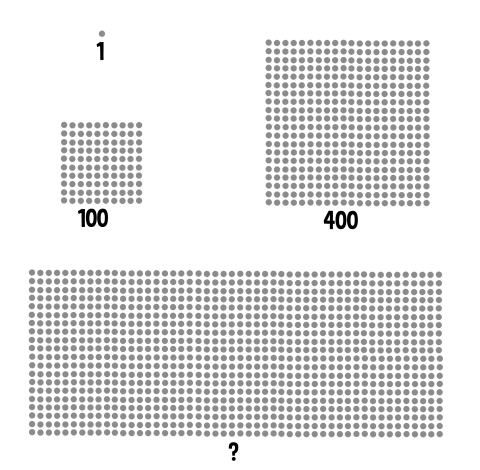
Cn you find a reasonable solution for the question mark?
                         Find a reasonable solution for the question mark

Lately I’ve been reading David Sousa’s book and have come across some interesting (at least to me) observations.  Humans have an innate ability to subitize.  That subitizing can lead to estimation and through appropriate practices this leads to bettering number sense skills.

After speaking with a few middle school teachers this summer I’m finding that one area that tends to need strengthening is found in the overarching umbrella of math skills: number sense.  Without adequate number sense skills, students flounder when asked to complete higher level math concepts.  Year after year I find some students have a decent understanding of procedures, but fall apart when it comes to explaining their reasoning for completing particular math problems.  Students are able to identify and repeat processes (usually copying the teacher), but not understand why they’re using that strategy.  I find this particularly a concern when students don’t question the reasonableness of an answer.  In my mind, I think finding a reasonable answer or estimation shows a form of number sense.  This isn’t always the case, but I tend to find it when students blindly follow only a set of procedures. I believe that this can lead to more problems down the line.

This is especially a problem with larger numbers. Researchers Carmel Diezmann and Lyn English found that the activities below seem to help students develop multidigit number sense.  All of these activities can be used at the elementary or middle school levels.  The headings in bold are found in David’s book and highlighted in Diezmann and English’s research.  My narrative is below each heading.


Reading Large Numbers

Placing an emphasis on place value when reading large numbers is important.  Being able to identify and see the value of each digit can help students read large numbers more accurately.  I find that students in kindergarten and even first grade start to combine place values when speaking of large numbers (e.g. one hundred million thousands).  Giving students opportunities to take apart these large number by digit value can help reduce this issue.  I find comparing standard and written forms of numbers can also help students start to recognize the place value of large numbers.

Develop Physical Examples of Large Numbers

Visually observing 100 and 1,000 dots can show students the physical difference between large numbers. There’s so much math literature that can help with this. 100 Angry Ants, Really Big Numbers and How Much is a Million can be used with manipulatives to show examples of large numbers. If you teach in an elementary school, I recommend adding these books to your math library. Using unifix cubes, base-ten blocks, or replicas can also be used to show a physical example of large numbers.  Having the physical example can benefits students as they start to question if their solution to abstract problems are reasonable.  A number line with 1:1 correspondent is also one way to showcase large numbers.

Appreciating Large Numbers in Money

Kids tend to like to talk about money.  Showing how $1 compares to 100 $1 bills can show students a visual scale between the amounts.  Visual representations of money in dollar and coin forms can lend itself to having students become more aware of how place value impacts the value.  A problem that tends to always get students curious relates to how much money will fit in a briefcase.  Will $10,000 in $5 bills fit in a 20″ x 18″ briefcase?  These types of questions can have students start visualizing money and the reasonable of their answers.

Appreciating Large Number in Distance

Maps can be useful here.  I remember having students use Google Maps to calculate the distance from one particular destination to another.  Also looking at the distance from one continent to another, or even from Earth to another planet.  I find that a good amount of scaffolding is needed to help students experience large numbers in distance/measurement.  Comparing skyscrapers to distances can also play a role with this as well. If you stacked one Willis Tower on top of another, how many would it take to reach the moon?


They’re many ways to have students observe and interact with large numbers.  I’d like to add appreciating distance in relation to time to the the list.  Time can also be used highlight and compare large numbers. I’m thinking of the dates in history and the Science involved in evolution. Many of these activities can be interdisciplinary as connections between curriculum content exist. Digital and physical forms play a role in having students conceptualize an understanding of large numbers.  Students should be given opportunities to recognize large numbers in a  variety of contexts.  By doing so, I believe students should be able to better question whether their answers are reasonable or not.

By the way, the answer to the top image is 1,000 dots.

Classroom Learning Spaces and #Edcampldr

Yesterday I participated in #edcampldr Chicago. A huge thank you goes out to Jeff and Jason as well as many others that helped organize this event.  Notes from the event can be found here.  It was great to be able to meet many educators and administrators in and out of the local area.  I’ve connected with many over Twitter during the past few years, but meeting them face to face was a great opportunity.

I found many takeaways from all the sessions, but I want to focus on one session in particular for this post. The fantastic Erin, Ben and Tom all helped facilitate the session related to creating classroom learning spaces. The session helped participants recognize the need to change the way classrooms are organized. Just like adults, the environment in which we learn in can significantly contribute to outcomes.  Unless there’s some type of mandate, teachers generally have control over how/what their classrooms looks like.  I think it was beneficial to hear from other educators and administrators that we have more control in our classrooms then we’d like to admit.  I feel like educators know this is true, but hearing from others in the field help affirm our own beliefs.  Powerful discourse has an opportunity to develop when educators move out of their district’s boundaries.  I believe these types of conversations happened in this particular session.

The presenters advocated for changes to the traditional classroom setup.  This session gave participants time to analyze their own classrooms, discuss possible changes, brainstorm ways in which to better organize their current structure and create a plan on paper. I felt as though the rich discussions that happened were valuable.  Hearing other plans helped participants question their own design and what to modify in the future.  Near the end of the session participants went around the room to view all the different types of models that were created. Opportunities were given to ask questions regarding the plans of others.  The focus of the discussions revolved around what learning environments best meet students needs.  Regardless of the many titles evident in the room, so many questions initiated a dialogue that moved participants to question their own structure. Here are a few questions that I heard in the process: do students need a charging station, research station, comfy seating, desks with casters? Students from the local high school were also a part of this process.  They offered opinions and ideas related to what designs work best for their own learning needs.  This was an amazing opportunity as educators are truly building their learning environments for the students.

Looking forward, I have a few steps that I’d like to take in redefining my classroom learning space.   I’d like to revisit ClassroomCribs to find additional examples and discuss possibilities of using both desks and tables in my classroom.  Also, I’d like to ask my own students to be part of the classroom learning space design process. I thought this session helped participants become more aware of how classroom spaces impact student learning.  This is a worthwhile topic to discuss as it directly impacts students.

Making Math Meaning Through Writing

Yesterday I was able to dive deeper in my summer reading.  I’ve been reading David Sousa’s book on how the brain learns mathematics.  I’m finding the chapter related to making meaning interesting.  David says that there are basically two questions that determine whether an item in the memory is saved or deleted.

Does this make sense?

Does it have meaning?

I believe students ask these questions on a daily basis. Some of the asking is mumbled under their breath, while other students will down-right ask the teacher.  I find myself asking these questions as I sit in professional development sessions.  Students want to know how this new learning applies to their life.  Students are better able to retain what they’re learning when it makes sense and can be connected to past experiences.  Those past experiences can develop into having meaning for students.  What’s also interesting is that experiences that have an emotional component present have meaning for students. Past experiences that are clear in my memory are often related to some type of emotional component. I feel like this is similar with students.  Those experiences are more likely to be stored in long-term memory.

This chapter in particular emphasizes the need to spend more time creating opportunities for students to develop meaning.  Without meaning, students often use formulas to compute numbers.  Their confidence falls on the formula and the student doesn’t necessarily understand the concept. Students eventually become so skilled at computing numbers that they find answers without thinking of the context. Most teachers have had conversations with students about their answers and if they make numerical sense?  In those cases students understanding the procedural aspect (formula) but it’s not in relation to the context (meaning).  In order to create meaning, students need time to connect and personalize the content.  In addition, they need time to explore, reflect and practice.  Writing in math class is one way for students to practice and create meaning.

I’ve been a long time advocate for using writing in math class.  My students in 2-5th grade have used math journals in the past.  They reflect on their past performance and set goals moving forward.  Writing in math class gives students time to process information.  That processing can lead to personal meaning.  Writing in math class can take many different forms. I believe interactive notebooks and foldables can also provide opportunities for student to process and make meaning.  By writing, students are required to organize their thoughts and find sense and meaning in their learning. Using math notebooks/journals can assist in giving students a way to also communicate their current understanding of the material.  Having a component where the teacher responds to the students’ writing can also provide another opportunity for feedback. Regularly writing in math class can also provide students with an outlet to create a record that they can look back at to review their growth.  Something that I need to keep in mind is that the math writing doesn’t have to be on paper.  Writing through a math blog or in some other digital format can also play a role in making meaning.


How do you use writing in math class?

Subitizing and Computation

Conceptual


This weekend I started to read a book on how the brain learns mathematics. The first chapter highlights the different ways people develop number sense. One of my takeaways came from a section related to subitizing.  Subitizing involves recognizing a number of items in a collection.  There are two types of subitizing that are communicated in the text: perceptual and conceptual.

Perceptual (glance and find the sum)

Perceptual Subitizing

Perceptual subitizing involves looking at a number of items and recognizing the number without much pause. Generally, the items are separate from each other and a quick glance will often reveal a correct answer.  Perceptual subitizing can remain fairly simple if the digits are close to zero. Larger amount of items often gives way for people to start counting each item. Counting individual items increases the amount of time it takes to find the total.


Group dots together, e.g. 3 groups of 4

Conceptual Subitizing

Conceputal subitizing is a bit different. This type of subitizing relies on the person to find patterns and use those spatial relationships to find a total. Grouping items together (such as 3 groups of 4) would fit into this category. Analyzing the spatial arrangement of the items can lend itself to people using conceptual subitizing.

I’m finding more and more that subitizing plays an important role in the early elementary grades. To a certain extent, I feel like students use subtilizing to quickly identify the number of dots on dominos and dice. Whether students use procedural or conceptual subtilizing depends on the number of dots and the arrangement of the pattern. Students that have a conceptual understanding of subitizing can group items to find sums. Grouping items together with spatial reasoning can lead students to discover additional computation strategies, such as splitting items into equal groups or constructing mental arrays. I see potential in using subtilizing strategies in the classroom.

While researching this topic I came across Steve’s subitizing page. Feel free to browse this amazing resource for more information and classroom resources.

Patterns and Pre-Algebra

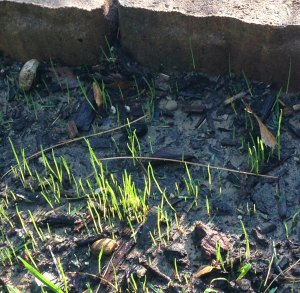
Yesterday I was able to get outside and walk around a local park.  While soaking up the sun I started to notice a variety of patterns on the sides of the path.  The patterns changed depending on the vegetation and location.  As I searched for additional patterns I started to find more and and then looked for consistency among the sequences. I took out my phone and started taking pictures of the patterns that I saw thinking that I might use them next school year. After collecting a few I started thinking about how this connects to the math strand of algebra.

What patterns exist?  What about lines of symmetry?
 How does symmetry play a role in the pattern?

Taking the pictures had me thinking of a class I had a few years ago.  I remember reading a district-adopted fourth grade text that introduced pre-algebra to students as patterns and solving for the unknown.  This simple kid-friendly definition was explained to elementary students in a short paragraph. After thoroughly discussing the definition of a pattern (yes, that took time), students took that definition and ran with it.  They started to find patterns (number and otherwise) in and outside of the classroom. If a pattern didn’t seem to exist, students would make a prediction based on the prior sequence.  A completed pattern seemed to make sense and an uncompleted sequence didn’t have meaning.  Students started to put on their “pattern glasses” to identify sequences.  Students would argue whether something was a pattern or not.  I distinctly remember one student saying that to complete the pattern you need to find the missing puzzle piece. These discussions were interesting to observe as students were developing their own rules to the patterns and offering their suggestions to others.


Additional pictures and questions:

What type of pattern exists?
             What type of pattern exists?  Do multiple patterns exist if you zoom in on the picture?
Photo Jun 23, 2 14 39 PM
               Would you consider this a pattern?

After uploading the pictures from the walk I started to think of how students make meaning out of patterns.  This past year my students were able to find patterns in nature, use Which One Doesn’t Belong, and then transition that idea to Visual Patterns.  Understanding the rule or rules behind the pattern can lead to different levels of pre-algebra moving forward. It’s amazing when students start to realize that there can be more than one rule to a pattern or question.  Simple patterns can allow students multiple entry point to access pre-algebra concepts.  Before the school year starts I’ll be pondering the question below.

How do students identify patterns and does that help them become better problem solvers?


I’ll leave you with one more picture:

Does this qualify as a pattern?

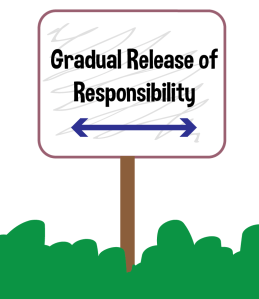
Questioning the Gradual Release of Responsibility Model

gradual responsibility

When I first started teaching I was told from one of my professors to grab Harry and Rosemary Wong’s book and use it as a guide.  The guidance in the book was direct and seemed to be working during my first year of teaching.  I still refer back so some of the pages from time to time.  For the most part my class of fourth graders fell in line with the expectations that I set, which were from the book.  My administrator at that time suggested I use a gradual release of responsibility model with my students.  This “I do, we do, you do” model was heavily emphasized.  Basically, I was instructed to start my lessons with a guided whole class instruction, move to groups or partners, and then have students work on assignments independently.  Student input was limited when I used this model and I didn’t really see a problem with that at the beginning of my career.  As the year passed I found that extrinsic motivation was keeping most students on task.  The pressure of getting high grades and outside rewards moved students in being compliant. As I gained experience my instructional strategies changed .

As the years passed I started to let students make a few decisions in the classroom.  I offered students a chance to sit where they wanted at the beginning of the year.  Students also had options in what projects to complete.  This happened rarely, but I found that the choice opened up a new realm of student responsibility.  When students had a choice they often performed better and with more enthusiasm.  The reward for accomplishing a task started to become more intrinsic.  From there I surveyed students and included plus/delta charts throughout the units that I taught.  The more students offered input and felt like their voice was being heard, the more active they became in their own learning experiences.  Now that students were offering input I gave them opportunities to reflect on their learning and had them set goals.  Last school year students participated in genius hour.  I was truly amazed at the projects that were created by the students and the passion that I could visibly see as students presented their projects.  Students happily took advantage of these opportunities.  Students were asked to think about their own thinking, which was a new experience for students.

This opened up a new realm of possibilities for students as I felt they were realizing teaching wasn’t being done to them.  Instead, students started to realize that they were an intricate part of their own learning.

All this is good, but this type of thinking didn’t happen until the last third of the school years.  I scaffolded the gradual release of responsibility model until I felt confident to let the students take on more responsibility.  My confidence in students was conservative and I didn’t take the risk in allowing them to take control until later in the school year.  I’d like to change this next school year.  Allowing students to be responsible early in the school year can lead to dividends throughout the school year.  One book that has influenced me in this thinking has been Paul Solarz’s book.  Students should be given the opportunity to take the lead and be empowered in the classroom. One strategy that Paul highlights is his “give me 5” technique.  I’d like to start this early in the school year.  I’ve also questioned my own thinking regarding how students should be expected to proceed with a gradual release of responsibility philosophy.

I still adhere to the philosophy although I’d like to tweak my perception of it.  Instead of providing constant scaffolding to release responsibility, I’d like to start off the school year with student empowerment opportunities.  Waiting too long to give students responsibility can be costly.  Giving students opportunities to lead with support and guidance from the teacher can lead to positive results. I’m assuming there will be times where students will speak out of turn or take advantage of the empowerment opportunities, but I’ll take that risk.  With direct teacher support and feedback, I feel like students will become better at taking responsibility for their own actions.  There is a risk, but I feel there’s so much potential in empowering students to become part of their own learning experiences.