What’s My Rule?

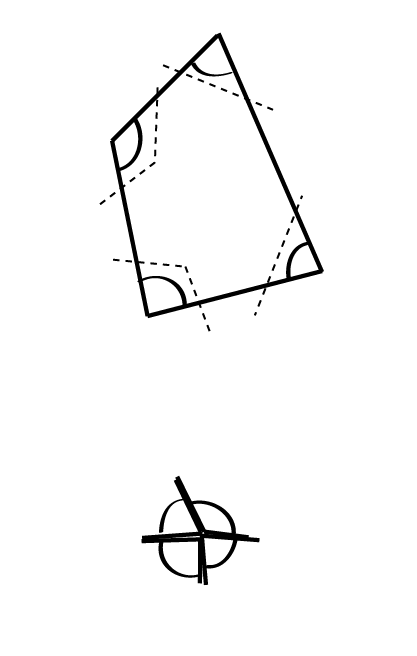
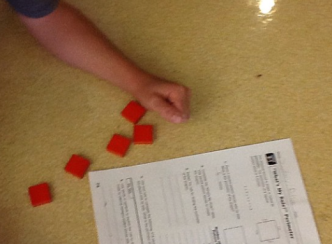
My third grade class ended their unit on data analysis and computation last week.  We’re now onto our next adventure of exploring patterns and number rules.  This last week the class started to identify number patterns.  The class observed how they could develop rules to find the perimeter of connected squares.  This was a bit of a challenge because students had to combine two different operations to find the actual rule.

Screen Shot 2014-10-11 at 7.54.13 AM
What’s the perimeter for three connected squares?

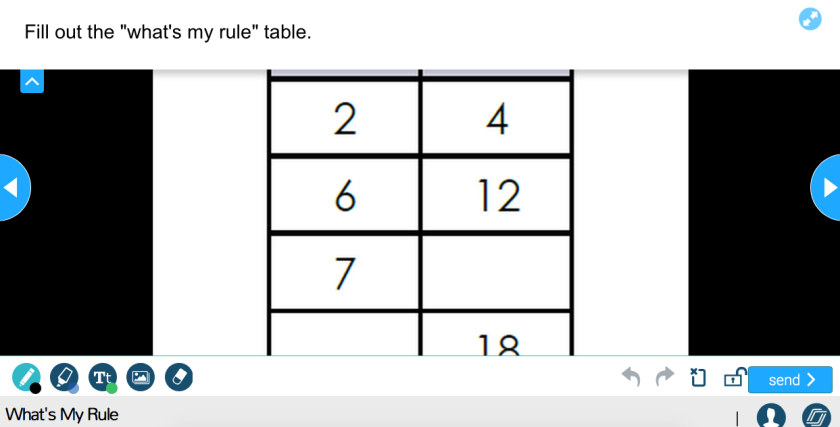
We used this activity that I discussed a bit more in detail last year.  They looked for consistency and investigated with trial-and-error what the “rule” might be.  The class used a Nearpod presentation to see how a function machine transforms numbers.

screen-shot-2016-10-09-at-12-49-18-pm
Click for presentation

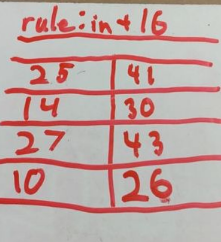
Eventually the class moved towards creating their own rules using dice and a whiteboard.  It was during this time period that students started to dig a bit deeper into how rules impact a table.

screen-shot-2016-10-09-at-10-51-31-am

One issue came up with the consistency of the numbers on the “in” side of the table.  A few students were confused with the idea that numbers didn’t necessarily have to be in order on the “in” side of the table.  A few examples helped address the issue but I thought it was interesting as most students are so used to a specific 1:1 scale.  I wonder if this is something that’s emphasized more at the second grade level and it just continues with our third graders.

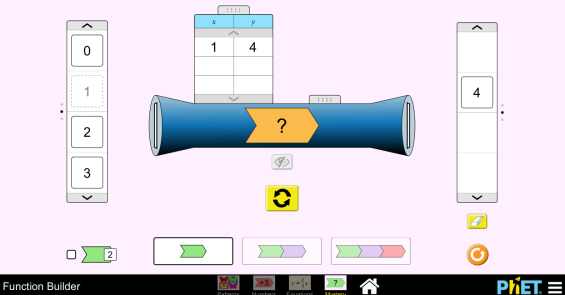
Later in the week I brought out a digital function machine.  The kids had a great time placing numbers in and watching at they transformed into something different.

screen-shot-2016-10-09-at-10-53-59-am


I highly recommend the PheT simulations. Feel free to check out other simulations that they’ve developed.  Next week the class will be working on creating and identifying true or false number sentences.

Data Landmarks and Spreadsheets

screen-shot-2016-09-30-at-8-48-43-pm

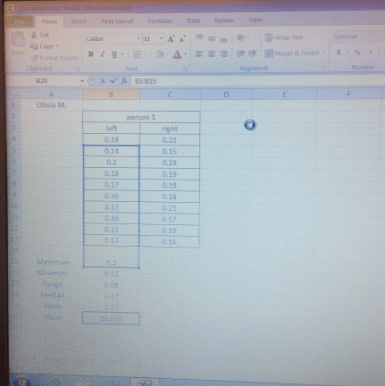
My fourth grade class reviewed data landmarks this week.  On Monday the class explored examples of the maximum, minimum, median, mean and mode.  I had to review the terms multiple times throughout all of Monday.  Kids kept on asking about the difference between median and mean.  During this process I was finding that students needed additional practice with the terms.  They seemed to need another way to remember the difference between the data landmarks.  After contemplating a few different review lessons I decided to check out my school’s laptops.  I vaguely remember reading about a teacher that used spreadsheets to reinforce math terms.  I decided to go that route for Tuesday.

So Tuesday arrived and students received their laptops.  I modeled the different components of Excel.  This took more time than I thought it would.  I reviewed the idea of a cell and the components of a spreadsheet.  During this time I had a lot of hands fly up in the air with questions.  The questions revolved around how to change the column/row size, what a cell is, where’s the formula bar and many others.  To get the ball rolling I had the students take some personal data and use it for this project.  The class formatted the spreadsheet and we were about ready to start putting in formulas and then … class ended.

We started back up on Wednesday and began the lesson by explaining how to use formulas in Excel.  I modeled the first formula of how to find the maximum of the data set =maximum(b2:b14).  Students followed the example with their own data.  We then moved on to minimum, which they easily constructed.  Median and mean were a bit more challenging but the students explored and found the formulas using the first example. The magic started when students were asked to manipulate the data in the non-formula cells.  Students started to observe how the data landmarks change when the data changes.  This sparked a classroom conversation on the difference between the mean and median and which indicator might represent the data better.

screen-shot-2016-09-30-at-8-45-26-pm

Afterwards, students were able to print out their creation and take it home.  The class will be discussing this in more detail next week.


Meaning and Algorithms

My third and fourth grade classes are exploring computation algorithms this week. Taking apart and putting together numbers is one of the skills needed to tackle higher level math concepts. I find it interesting when this topic is brought up as I sometimes hear students commenting that they already know how to add/subtract. Many of my students have been instructed to use the traditional algorithm to add large numbers.  After digging a bit deeper I started to see students falter with their explanation of the traditional method.  I asked them to explain their thinking. I found that their reasoning started to turn into comments about the process. Students explained the steps involved to find the product.  One student told me about the example below.

traditional-01
Traditional

The process, although important, doesn’t reflect mathematical understanding. Students didn’t mention place value at all.  Place value within the traditional method is evident, it’s just that the students weren’t able to explain it with confidence.  It reflects more of an understanding of the procedures required to find a solution. Most of the students that I see are used to adding/subtracting numbers on a number line. They can hop up and down the number line with ease.  Once they feel comfortable with that, parents or others start to show students the traditional algorithm. Students become familiar with the terms carry, borrow, cross-out, add a zero, and others without necessarily knowing the reasoning behind the process.

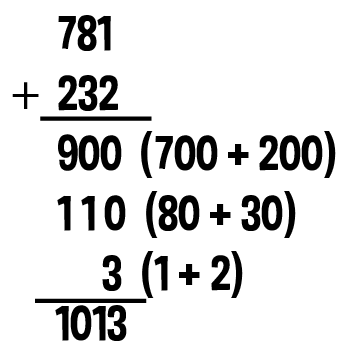
This past week I introduced the partial-sums algorithm. This is one of my favorites as students start to see the reasoning behind the process that they’ve been following for years.  Although at first it can seem clunky, students started to see how place value can be a key indicator in determining the sum. That’s an #eduwin in my book.

partialsums-01
Partial-sums

Later that hour students were given an assignment where they had to find the sum using the partial-sums method. Some students struggled a bit to move out of the traditional algorithm process and move to a different algorithm. Afterwards I gave student the option to use whatever method best meets their needs. It’ll be interesting to see the progression that students make as they decide on an algorithm. When asked about how and why the algorithm works I’m hoping they’re able to confidentially create their own proof.

We’re making progress!

Math Puzzles

My students enjoy puzzles. It often doesn’t depend on the type of puzzle. They like the trial-and-error of attempting to find patterns and eventually solutions. In math class these puzzles take on many different forms. I believe that patterns and puzzles play an important role in the math classroom. Some skills are more aligned with using puzzles than others.

Puzzles offer learners multiple entry points. Students have the option to look at a puzzle and decide to start in one section while another student decides to start in a different section. One puzzle that’s been thrown around the Internet is below.

p1

I gave this puzzle to my fourth grade students. Students started to calculate how much each horse was worth and worked from there. I had other students that immediately looked at the horseshoes and found that the total worth would have to be divided by two. After working with each other the students then conversed in groups. The discussion was fabulous. Students started to identify where a mistake was made and corrected their papers as needed. During this time students were engaged, using math vocabulary and practicing skills that they will see again throughout the year. What I found interesting was that zero students had the correct answer the first time. It took perseverance as well as a thorough amount of collaboration to get to a consensus. The class had a conversation afterwards.

The key I find is connecting the puzzle to the skill/standard. Afterwards, students understand that this was a fun problem, but was the puzzle connected to a certain skill? Connecting the puzzle to prior skills not only shows how this fits into a continuum, but also gives students a picture of what skills are being addressed. Maybe the skills can be introduced after the lesson. I know that the exploration that students participate in is a valuable piece in the learning process. What are students exploring as they unpack the problem? The objective isn’t to just solve the problem. The bulk of the student learning experience is using the substitution process to find a solution.

p2.png

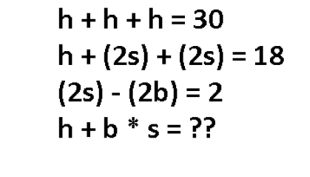
After discussing the solution I drew the picture above on the whiteboard. Through this I attempted to bridge the puzzle to more of an abstract model. This made sense to some students while others were debating on whether this matched the earlier puzzle. Regardless, the transition seemed beneficial in having students use substitution to find a solution.

Next week the class is tackling a different problem.

p3

I’m already looking forward to using this with my students.

Working Towards Mastery

The last five days concluded the first full week of school with students.  This past week teachers started to dive into content and policies were in full effect.  My school had its curriculum night on Tuesday and Wednesday.  It was there that many teachers explained their expectations, homework and grading policies to parents.  My presentation was similar to last year, but I added a brief component related to grading/feedback.  This part of the curriculum night presentation stemmed from the events in the paragraphs below.

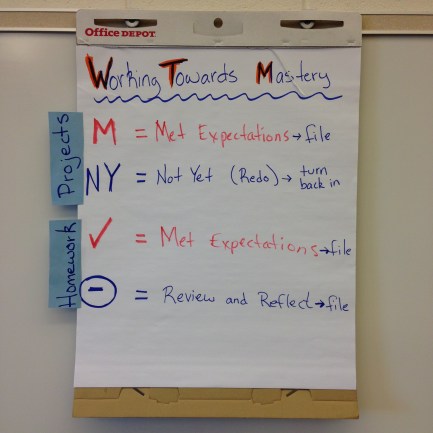
Earlier in the week I spoke with my classes about giving them chances in class to review feedback and redo assignments.  I told them that students are able to do this when the environment allows for second chances exist. This year assignments completed in class will note a NY or M near the top of the paper.  I’m actually borrowing this idea from a class I took years ago.  I introduced this process to students earlier in the week using an anchor chart.

2016-09-02 07.13.38

The NY means that the student isn’t yet meeting expectations for that particular skill.  Students are asked redo any assignment that includes an NY.  They don’t need to necessarily redo the entire assignment.  Instead, I’ll highlight a certain section that needs to be changed.  Students then redo and return that assignment.  An M indicates that the student met the expectations for the assignment. Ideally, the NY papers eventually turn into M papers. So far the process is working well.  I’d say the majority of the NY papers that are returned have turned into papers that meet the expectations.

2016-09-03 06.29.48

Management is something that I’ll be looking at improving.  Finding time for students to redo the projects hasn’t turned problematic, but I’m looking at designating a certain time in class for students to work on the NY papers.  I haven’t yet set a deadline to when I’ll accept all the redo papers. It’ll most likely be a week for the trimester ends, but that decision hasn’t been set in stone.

Currently, I’m only using this process for projects completed in class. The good news is that students are starting to redo and turn the sheets back in.  Another positive is that students aren’t focusing on the grade on the project.  They’re looking at what concept needs strengthening, asking for help when needed and redoing the project.  In doing this students are working towards the mastery of concepts rather than focusing entirely on the grade alone.


First Day Plans

Screen Shot 2016-08-27 at 9.51.27 AM
Welcome Back!

Students started their first day of the 2016-17 school year this past Thursday.  The school busses rolled up to the school curb around 8:15 and dropped off their students.  Excited and anxious students came off the bus and directed themselves towards their teacher’s line. Teachers stood with clipboards ready to meet students and match a name with a face.  Some students knew exactly where to find their line while others were confused because this was a brand new experience for them. Teachers came to the aid of those students that needed help to redirect them to the correct teacher line.  High-fives and hugs were prevalent as teachers and students started the year off by making meaningful connections.

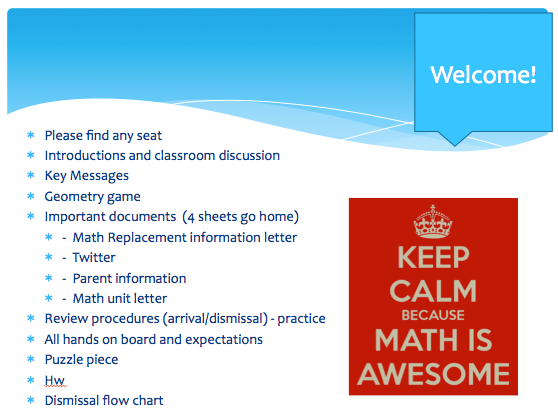
There’s nothing quite like the first day of school for students and teachers alike.  There’s a sense of optimism and a fresh slate.  This is part of the uniqueness of being a teacher.  My first day plans seem to change every year.  The changes are small, but I’m always looking for ways to optimize that first day to start off the year on the right foot.  The emphasis is always on building a classroom community.  This emphasis continues throughout the school year, but is much more prevalent during the first week of school.  As students entered my class they saw the slide below.

Screen Shot 2016-08-27 at 9.34.34 AM

Students generally find their own seat.  This year I had students use a sort to get to know each other and what they did this summer.

Screen Shot 2016-08-27 at 9.41.56 AM

I gave students around three minutes to find matches.  Afterwards the class discussed anything that surprised them.  I had a few volunteers add to the discussion.  I introduced myself to the students.  The majority of them know about me as they see me in the hallway of the school or they’ve had me in another class.  I intentionally spent some time to describe my family and hobbies.

After about 10 minutes the class moved on to the next activity.  I borrowed Sara’s 100 task activity. Feel free to check out the link for exact directions and make sure to follow her @saravdwerf. Basically, students are placed in groups and asked to find 100 numbers in sequential order.  Students are given three minutes for the first trial.

Screen Shot 2016-08-27 at 9.43.50 AM.png

Teams have to work together to find the numbers.  After the first trial most groups found between 10-20 numbers.  I asked the groups to discuss strategies and gave them a second trial.  During the second trial students identified 30-40 numbers.  After the second trial students were given more time to discuss strategies needed to accomplish the task.  I then divided the board into quadrants.  I didn’t give students any more specifics and let them discuss strategies.  The majority of the groups were able to find all 100 numbers during the third trial.  During that time I took pictures of the groups and then the class created an anchor chart on what quality collaboration looks/sounds like.  The chart is not complete as the class will add more details next week.

Afterwards, students started to fill out their ‘about me’ puzzle piece.  On each piece students wrote specific information about themselves.  Eventually the pieces will be posted in the classroom.

Screen Shot 2016-08-27 at 9.44.08 AM

Students didn’t finish their puzzle piece but that’s fine.  They’ll continue working on that during day two.  We didn’t even open up our math journal for the first day and that’s also fine. Building a classroom community is important and that’s our focus for that first day.  These relationships will be foundational for this school year.  Next week the class will be discussing how to have a growth mindset and we’ll be starting Number Talks.  I’m looking forward to the adventure!

Evolving Teaching Strategies


2016-08-16 11.45.13

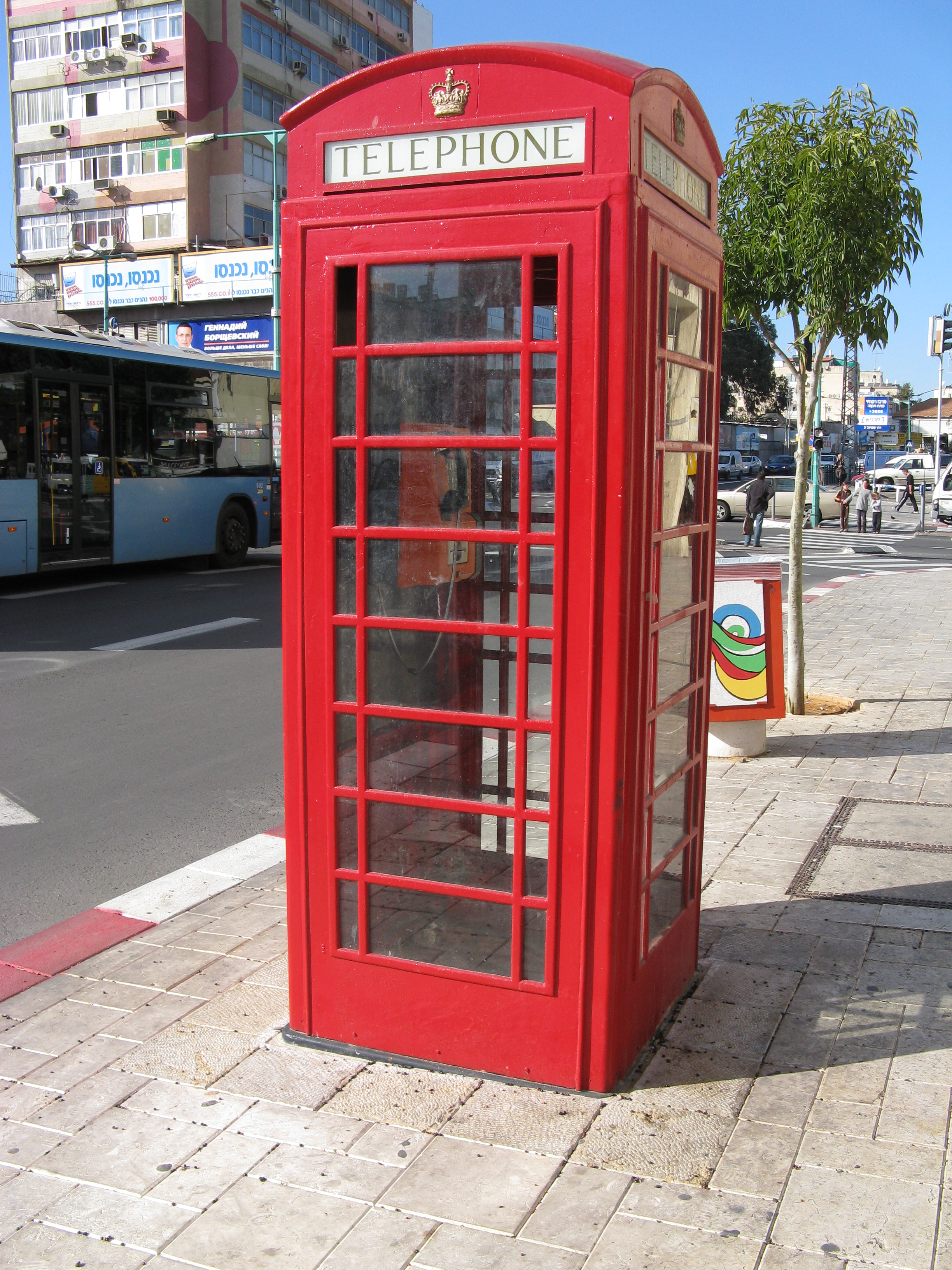
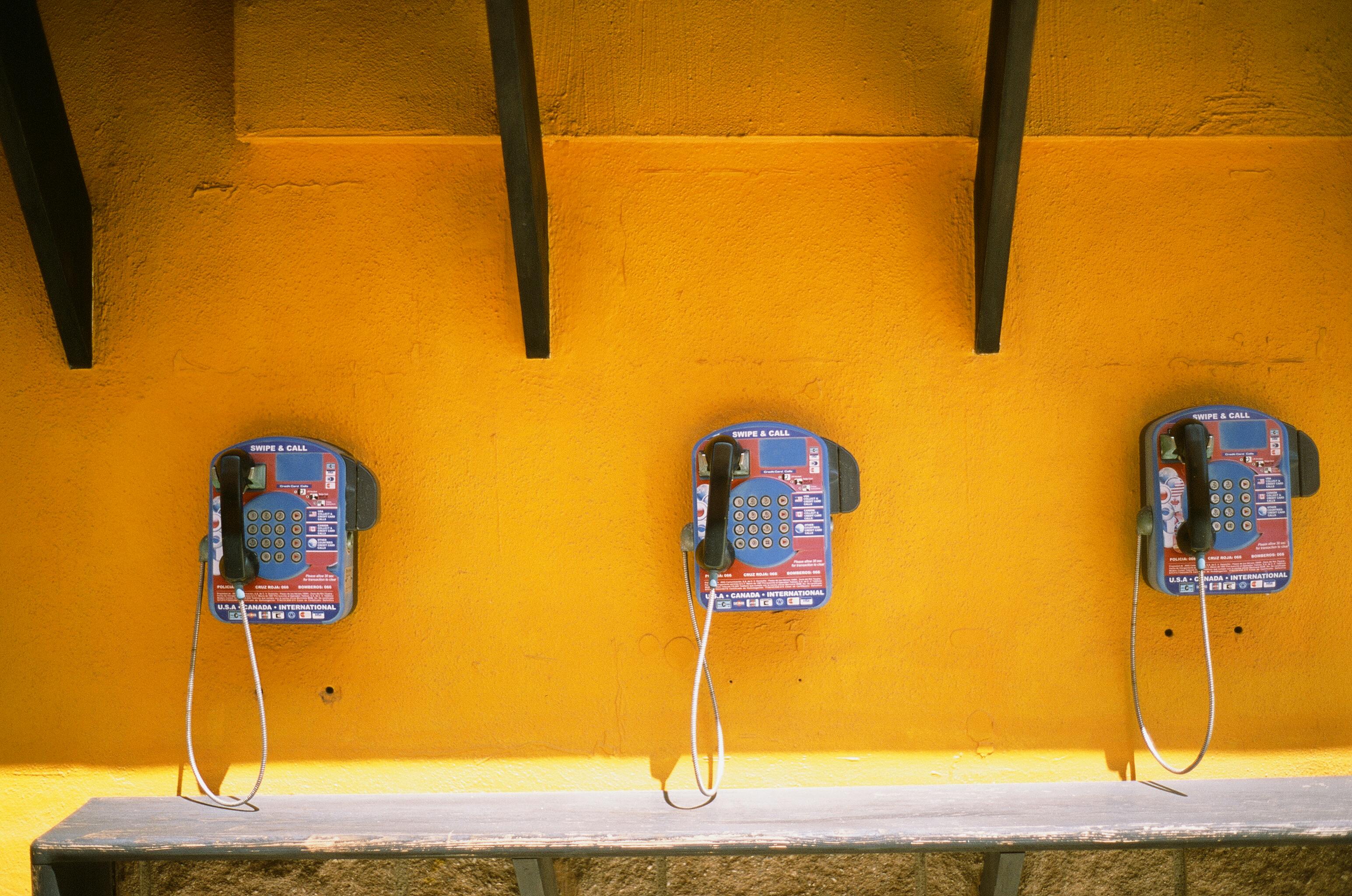
This past week I was traveling and was taken off guard when I saw a phone station. At first glance I thought this was a modern day phone booth. I looked for the phone, credit card reader, directions and buttons but couldn’t find anything. I actually looked a bit closer at the parts. There were only two.  There was a small partition and place to put your phone as you speak with people.  After a few weird looks from commuters I concluded this was a modern day phone station/booth.

It had me thinking of how the phone booth has evolved over time.  It had a purpose back in the past and seems it still has one now.

Examples of how products have evolved over time can be found just about everywhere.  This can be true for products as well as strategies/processes.

I believe the same can be said about instruction in schools. New research can impact the strategies that teachers use in the classroom. These strategies have also evolved over time. Marzano and Hattie are just two names out of many that have impacted the field of instruction and teaching strategies.  Some strategies have been proven to be more efficient than others.  Books, articles, administrators, coaches and other professionals often impact what new techniques educators utilize. How students respond to those strategies is important. Some of the strategies I used when I first started teaching continue to work and others were cut after the first year. Educators reevaluate tools and techniques in their classroom. I believe this reevaluation is a form of evolution that comes with experience and betters teachers and their students over time. Some of the strategies that I use stay the same from year to year while others change. I question some of the tools and strategies that are used or given to me. Are they efficient?  Do they provide opportunities for students to make meaning? Is this the best strategy for my students? Educators often adapt and evolve their teaching strategies to meet their students’ needs. Teachers evolve over time and this is a driving force that can impact students for the better.

Understanding Number Relationships

cmparing-01
Grouping Strategies

Today I was able to dig a bit deeper into Kathy Richardson’s book. The first chapter was related to counting and critical phases that are needed as students develop numeracy skills.  The second chapter focuses on number relationships. In order for students to compare numbers they need to be able to distinguish between larger and smaller. Once at this stage students can recognize that numbers are found within numbers.  For example, eight is found within 10. When comparing numbers students generally start to identify differences between the original number and one.

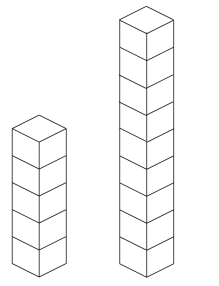
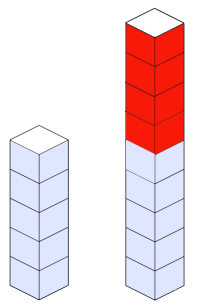
Richardson states that being able to change a number by counting on or adding to a group is a Critical Learning Phase.  Counting on or adding to a group of numbers is a strategy students use when comparing numbers. I believe primary students might use this strategy to find out how many blocks are in both stacks below.

blockwoutnumbers-01

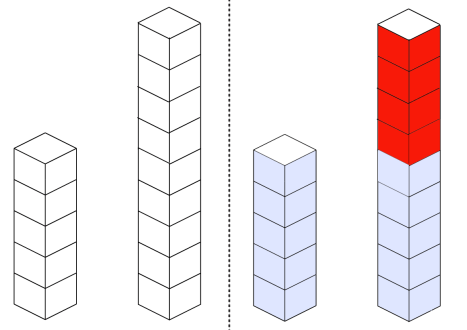
Assume that each block is the same size.  Now, how do you think primary students would count these two different stacks?  The strategy that they may use to solve this can tell  more about their understanding.  Are they counting each block individually or using the first stack to count on to find the second stack? While comparing numbers younger students often count each block individually.  The model below shows a different strategy.

colorfulpenguin-01.png

In this case the student has taken the five and built upon it to find four more.  The five and four are nine.  This student didn’t count each stack individually.

I find this interesting as it may apply to other areas of mathematics.  After reading this I started to think of how increasing the complexity could apply to fraction concepts.  Specifically, I thought of how theses blocks and fractions are similar:

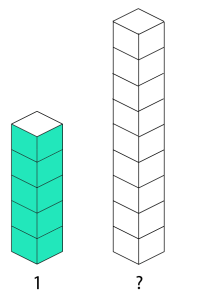
fractionblocks.png

If the green stack is one whole what is the second stack’s value?  How would your students solve this?  In the example students may identify that each block is 1/5.  When looking at the parts on the right they might start off at 5/5 and add to that particular block line. Fractions can lead to confusion with a non-linear scale being present.  This is especially the case if students are always seeing 1:1 ratio when counting objects.

I thought a number line might be a better representations for a fraction problem. Richardson notes that number lines are only symbolic relationships.  She also states that when students use number lines they’re most likely not thinking of quantities, but more so using the line to find the solution. They’re using it as a tool to count on to find a solution.  Number lines are used frequently at the early elementary levels so this is something I’m going to keep in mind for the new school year.

Learning Number Concepts

Kathy Richardson-01

This summer is moving by quickly and thoughts of the upcoming school year are in view.  I’m in the process of preparing materials and the first few lessons.  This year my math sections are larger than before and it changes some of the ways in which I prepare. While researching a few ideas I came across a Tweet from Jamie.


I’ve heard of Kathy Richardson and her role in the math education world, but haven’t delved too deep into what she’s written.  This book interested me mainly because of the use of Kathy’s critical learning phases.  As students progress in school they visit different stages of mathematical understanding.  It’s not always linear, but these stages tend to follow each other. I wanted to learn more about this process.

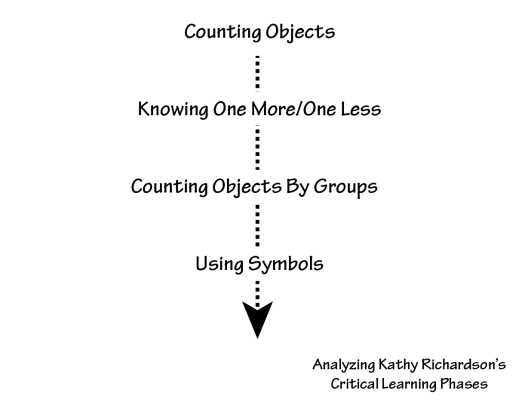
So the book arrived yesterday and I was able reading through the first section. Kathy states that children learn number concepts in different learning phrases.  She coined the phrase critical learning phases to describe the stages that kids pass on their way to making meaning of the math they encounter.  The first section of the book focuses on understanding counting.  On first glance I thought this would be very basic.  Advertised and delivered.  It’s basic, but also intriguing and gave me a few takeaways.  After reading this section I started to draw parallels to how my own students make sense of numbers.  I then wanted to reach out to my colleagues to direct them to this section. Understanding counting, although basic, is a foundational skill that is built upon.  My paraphrased version of Kathy’s learning phases are below.


Counting objects

  • Counts with 1:1 correspondence
  • Knows “how many” after counting
  • Counts out a specific amount
  • Spontaneously adjusts estimates while counting to make a better estimate

Knowing one more/one less

  • Knows one more and one less in a sequence without relying on counting out
  • Notices if counting pattern doesn’t make sense

Counting objects by groups

  • Counts by groups
  • Knows quantity stays same when counted by different sized-groups

Using symbols

  • Uses numerals to describe amount counted.  Connects symbols to amount counted.


As I read through this I started looking through my school’s teaching materials for grades K-3.  Some of the materials follow a linear progression while others tend to favor spiraling.  I have a few takeaways after reviewing this first section of the book and looking at my district’s materials.

  • If counting is important than students will start to see why keeping track/organizing numbers is important.  If it doesn’t matter students won’t care whether they come up with a different amount when a specific amount exists.
  • Being able to “spontaneously adjust estimates while counting to make a closer estimate” is a skill that’s found as students progress through the elementary grades. This plays a major role in measurement as students are asked to estimate using non-customary  tools.  I also see a connection to Estimation180 as students might use proportional reasoning after initially counting to find an estimate.
  • Moving from 1:1 correspondence counting to group counting can be confusing for students. Understanding that counting by 2s, 5s, or 10s is a strategy that’s more efficient and that may be learned in time.  Students might not initially come to this conclusion and replace 1:1 with 2:1, 5:1, or 10:1 if they don’t understand the reasoning and if they’re taught in the same period of time. For example, I find this evident when there’s a disconnect between counting by 10s and grouping numbers into 10s and then counting the groups.


Proportional reasoning

header-01.png


This summer I’ve had opportunities to review math units that I’ll be teaching in September.  I’ve been beefing up the units with formative assessments and intentional questions that focus on math reasoning.  One skill that seems to need bolstering every year falls in the category of proportional reasoning.  This becomes quite evident when students encounter fractions and rates. Some students may use proportional reasoning,but it’s not necessarily identified as a strategy or communicated using that specific vocabulary.

I also picked up this book over the summer.  I read it about a year ago, but I’m finding so many gems in there a second time around. The authors reveal research that indicates teaching proportional reasoning has benefits.  The authors also showcase that proportional reasoning is difficult to define, but they can categorize what people can do with this type of reasoning. People that use proportional reasoning understand the relationships that numbers have put together and how they relate individually.  They can analyze numbers and look the difference (additive) between them and observe the ratio (multiplicative).

My takeaway from this section of the book comes from the authors’ five reminders.  These reminders come in handy when thinking of how to create learning experiences involving proportional reasoning.

1.) Use unit and multiplicative models.  Double-down on using the idea of a rates, which can be applied to the idea of a proportion.  Specifically, I can think of rate tables to be helpful with this.

lemonade-01-01

2.) Identify proportional and non-proportional comparisons.

proportionvsnonproportional-01

3.) Include measurement, prices, graphs, and geometry to show proportions. Proportional reasoning can be found in a variety of contexts.

hexagon-014.) Solve proportions using different strategies.  Focus on reasoning.  This may be ignited by planting questions that elicit different ways to solve the problem. Students should be able to compare and discuss what comparisons exist.  This can also be addressed through the use of “what’s my rule” tables.

ruletable-01

5.) Have students recognize that short-cut methods such as cross-multiplication aren’t helpful in developing reasoning.


Being able to identify proportional reasoning can help teachers emphasize its usefulness. Having in-depth conversations about this type of reasoning has benefits.  I realize that this post is heavy on tables and that’s not the only form that proportions take.  I do feel as though the tables help students observe the relationships a bit easier since it’s organized. While exploring this topic I came across a MARS activity that I’m planning on using in September.