An Elementary Desmos Journey

Screen Shot 2018-06-06 at 8.31.26 AM.png

During the past few months I’ve had a chance to explore Desmos.  I started seeing the platform on Twitter a while back through different educational chats.  It was prevalent in #msmathchat as well as in the EduTwitter math world.  I saw it across my screen, but didn’t really dig into how it could be used until NCTM.  During that time I attended a session titled “Which Comes First:  The Equation or the Functions?  Come Stack Cups and Use Demos to Find Out!” The session was presented by the University of California staff.

The session started out by having the participants sit in groups with a stack of styrofoam cups.  We were asked the question below.

Screen Shot 2018-06-06 at 7.32.11 AM.png

My table took the cups and started stacking them. They found the measurement of one of the cups and decided to use millimeters to be more accurate.  We came to a consensus and decided to extend the pattern and graph our pattern.  The presenters then asked us to head to a Desmos url where we could plug in our numbers.  The audience filled out this step-by-step sheet for the next 20-30 minutes.  Being a newbie to Desmos, I appreciated how the sheet guided us through the different components of Desmos and how it graphs the line as the numbers change.  The sheet also includes teacher directions that I found useful as I replicated this exact lesson a couple weeks after NCTM.

The second part of the session went in a different direction.

Screen Shot 2018-06-06 at 7.40.51 AM.png

Basically, we were asked to find out the option that would give us the most money during the next 14 months.  My table filled out this sheet and used this Desmos template to find a solution.  There was a lot of trial-and-error during this time and some perseverance, but it was a worthwhile journey.  Listening to others at my table was enlightening.  Hearing how other teachers, mostly at the middle and high school levels, gave me a different perspective.  Being able to find patterns and develop algebraic reasoning was at the forefront.  Using Desmos to create or check our predictions was helpful.  Moreover, I was able to learn more about the Desmos platform and how it could be used in my classroom.

Near the end of the session I started gathering all the links to save for later.  I started to think about how this could be used in my own classroom.  I began by using a few different tasks with my sixth grade standards.  The inequality activities were very helpful as I was becoming more familiar with the logistics of using Desmos in the classroom.  Desmos isn’t a math tool that’s used frequently in elementary schools.  The calculator included can be intimidating for elementary students as well the teachers.  Although, when my class first started using the platform my students were totally interested in wondering what all the symbols meant on the calculator.

During NCTM I was fortunate enough to come across Annie’s post on how to use Desmos in the elementary classroom.  I reviewed all of Annie’s examples and decided to graduate and move on to creating my own.  I started with copying a couple card sorts for a kindergarten and first grade group that I see four times a week.  The sort included having students put together base-ten blocks, written names, standard form, and expanded form statements.  The lesson went well and I had to intensely model how to login and ended up using a QR code for students to access the url on an iPad.

I then started getting used to how to create better questions using “what do you notice” or “what do you wonder” types of prompts.  About three weeks ago my third grade students needed to review polygons and relationships.  I decided to put together an original activity.

Screen Shot 2018-06-06 at 8.08.57 AM.png
Link

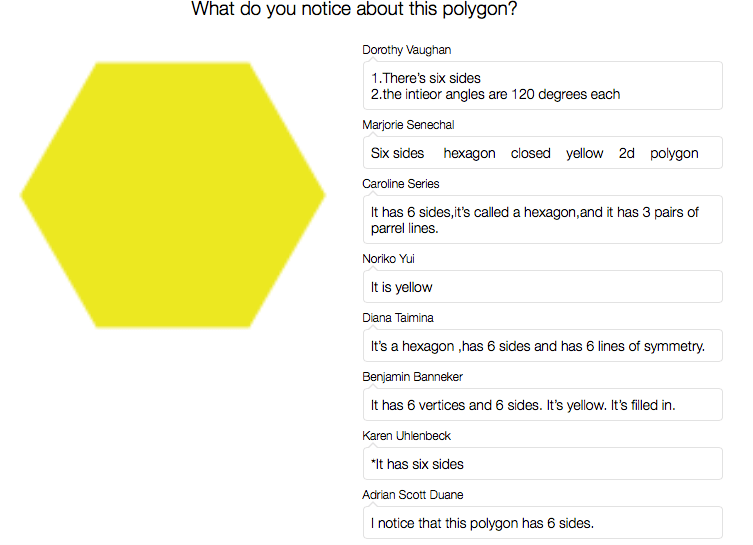
I ended up making the shapes in Illustrator and inserted them into the activity.   I used this task with a third grade group of students that were working on fourth grade standards.  Students worked in pairs as I didn’t have enough Chromebooks and iPads for everyone that day.  I used the pacing function and made sure all the students were on the first slide.  I love that Desmos includes that function as many of my students want to speed through an activity.  Stopping with “pause” to review all the different responses was also helpful.  This helped encourage a class discussion.

Screen Shot 2018-06-06 at 8.11.36 AM

At first I used the “anonymize” option, but soon found that students wanted to be identified.  Students used a similar prompt with a trapezoid and triangle.  I then went over a few different vocabulary terms before heading to the next slide.

Screen Shot 2018-06-06 at 8.15.18 AM.png

Students checked off the criteria that matched the shape.  I then displayed the correct solution and this led to additional questions and conversations.  When creating this I decided to look back at some of the most engaging Demos activities that I’ve used.  Most of them ended with some type of card sort.  I decided to do the same.

Screen Shot 2018-06-06 at 8.18.13 AM.png

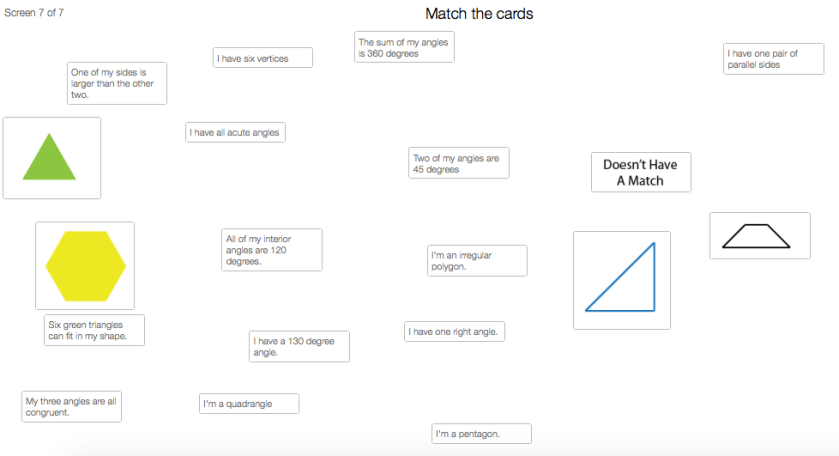
I decided to have a “doesn’t have a match” column to increase students thinking.  It took a while for students to complete this as certain criteria worked with only one shape while other statements didn’t match any.  When I first created this I noticed that some of the statements that were created matched multiple shapes.  Ooops.  It was fixed before I gave it to my third graders, but that could’ve caused a few issues.  After around 10 minutes we review the answers as a class.

Screen Shot 2018-06-06 at 8.21.45 AM.pngStudents self-checked their work to see how accurate they were.  Some students didn’t actually match the statements completely.  They brought the statement to the column, but didn’t attach them.  I should’ve explained how to do this before completing the activity.  This happened with around three students.   The next time we completed an Desmos activity those students were fine and attached the statements.  There’s a small learning curve with these types of activities and this was one of those moments.
My next step is to learn how about the computation layer and possibly how to use it more effectively with my K-3 students.  I think it’d be great to be able to rotate or drag a shape on a coordinate grid.  Students could then use a digital protractor to measure the internal and external angles.   I’m also looking at how to use polygraphs more effectively next year.  My students had a blast using them during the last week of school. Maybe I’ll learn about that during the summer.  I’m looking forward to using this more with my elementary students next school year.

Exploring Scale Factor

Screen Shot 2018-06-02 at 10.54.08 AM.png

My fifth grade students explored scale factor and dilations this week.  This was their last week of school and it was a great topic to study as they head off to middle school next year.  Some of the geometry that they’ll see in middle school involves this specific topic. The class started early in the week with a brief Kahoot! on similar figures and enlargements as well as reductions.  This was a bit challenging as some of the shapes were rotating and students had to identify a particular side.  After discussing words like dilation, scale, and factor, I gave students a multi-day project.  This project actually stems from one of Allison’s Tweets that I read earlier in the week.

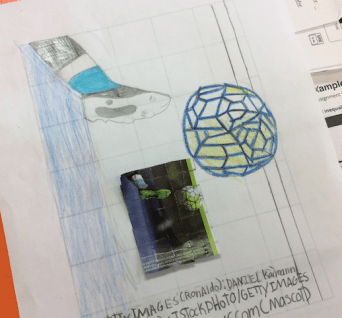
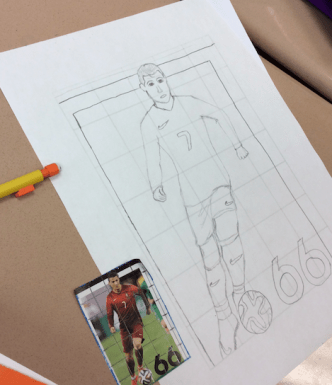
At first glance the image in her Tweet made me laugh.  My second thought was … wait… this might work in my classroom. You know how a Tweet can spark additional ideas?  Yes.  That happened here.  I asked Allison about the project and she provided additional details about the pre-image.  So I put together a direction sheet and rubric.  I decided to have students use a 5 cm x 7 cm grid.  The class then discussed how enlarging the image would change the horizontal and vertical dimensions.  I decided to not have them reduce images since the pre-image was already so small to begin with.  We did discuss how me might need a magnifying class though.

Students went through their Math Magazine.  They looked for an image inside the magazine that they found interesting.  Some students found something immediately, while others took some time.  Students then traced over the 5 cm by 7cm card, used a straightedge to create grid lines, and then finally cut out the sheet.  Students then pick their scale factor page.  Just about everyone picked the 15 cm by 21 cm grid.

Screen Shot 2018-06-02 at 10.54.02 AM.png
Note to self:  In the future I need to have students randomly  (maybe with dice) pick a different scale factor page.  

Students were then off to work in creating the image.  Some students asked questions about whether they needed to enlarge everything on the image.  Yes.  Interesting … some students thought it was just the picture that was enlarged and not the text.  Everything in the gird was increased by the same factor.  Once that was covered students made steady gains for the next 20 minutes.  They started with pencil and then shaded in the rest with color.  Students were proud of what they accomplished during the first session and many wanted to finish them up at home.

Screen Shot 2018-06-02 at 10.53.48 AM.png

Students finished up their scale factor projects on Friday.  Since it was the last day of school I sent them home.  I gave each student a survey (this might be another post) before leaving and it was interesting that many commented about how they enjoyed learning about scale factor and ending the unit with a project like this.  Maybe it’s because it was the first thing in their mind, but I thought this type of project was worth the time and will help students moving forward as they discuss similar figures next year.

I’d like to find more time over the summer to create more memorable math activities similar to this. Kids can then hold onto these experiences past the last day of school and look back on them as they make connections next school year.

The Last Five Days of School

Screen Shot 2018-05-25 at 7.27.52 PM

There’s about one week of school left before the end of the school year.  My school year ends on June 4th. Students know it, parents know it, and so do the teachers.  You can tell that school is coming to a close.  It’s in the air.   Teachers are starting to box up items and are planning their last few lessons of the school year.  The last class newsletters are being posted and student lockers are starting to empty.  The media specialist and library team is attempting to retrieve all of their books for inventory. Teachers that are retiring or leaving are giving away their resources and some teachers are moving classrooms.  The sound of tape closing up moving boxes echos around the school.   Multiple bulletin boards are being stripped down to reveal their natural cork board surfaces.  The classroom walls will soon be bare as teachers start thinking about the next school year.

Screen Shot 2018-05-25 at 7.29.47 PM.png

Yet, we have one week left. There’s been a lot of emphasis on the first five days of school, but in this post I’d like to address the last five days in one of my classes.

Monday is Memorial Day so students will begin the week on Tuesday.  Two of my classes will  be taking an assessment during the last week of school, which means that I can’t close out my grade book until the tests are graded.  Both classes have been exploring fractions and measurement and I don’t think the assessment will take longer than one period.  My class that isn’t taking a test is completing a scale factor project.

On Wednesday students will complete their last math journal reflection of the year. I’m in the midst of creating some questions for this and hope to finish it up by Monday.  Basically, I’m going to have the students analyze all of their assessments and SeeSaw account.  They’ll then reflect on the progress that they’ve made this year.  They’ll pinpoint a few strength areas and areas that could use some strengthening.  Since I loop with many of the classes I’d like to have the student create a summer goal that we can discuss when they return in August.  Students will bring home the tests that Wednesday to be signed and returned.

I plan on having Thursday be a research day for our math genius hour projects. Students have already created a questions and are currently in the research phase.  Some students are putting together their presentation while others are just beginning.  I don’t intend on having the students present his year as they’ll continue this project next school year.

Friday is designed as an end-of-year celebration.  Students will play different math games that we’ve used throughout the school year.  Some of the games are digital, while others involve cards and dice.  The last 10-15 minutes of class is used to fill out a class survey.  Again, I’ll be working on this over the weekend, but you can see something similar that I’ve used in the past here.  I say goodbye and tell the kids to have a great summer.  Some students are excited to get out to the bus and leave, while others want to talk about the year or what they’re doing this summer.

Field day is scheduled for Monday.  I generally don’t see the students much during field day.  I help out the different teams and at the end of the day all teachers have bus duty.  The fifth graders are “clapped-out” of the building and all the teachers wave goodbye as the busses leave.

Similar to other teachers, I have mixed feelings about the end of the school year.  It’s great to celebrate another year and the progress that’s been made.  But there’s also something different about coming back to your classroom that’s empty.   The clean up process begins and eventually teachers head home and another year is in the books.  I’m looking forward to recharging over the summer, but also have a few different work-related events.  Before you know it, I’ll be back to setup my classroom for another year.

Math Group Tasks

Screen Shot 2018-05-16 at 5.13.17 PM

My students have around two and a half weeks of school left.  Standardized testing has finished up and I’m planning out the end of May.  Each one of my math classes will be taking one more unit assessment before the end of May.  My fourth grade class has been exploring measurement conversions, computation, and graphing.  For the past week my students have been participating in group work where they’re given a task, anchor chart paper, (sometimes I split one sheet in half or quarters) and Expo markers.  Students work together to create a plan, create visual models, and report out the results.  Below is the structure that I’ve been following.

First, the teacher reviews the task with the entire class.  Students ask questions and clarification is given.  The tasks are often open-ended and require additional thought and reasoning beyond a yes/no answer.  Usually students need to construct a plan and present the best option.

Screen Shot 2018-05-16 at 5.13.04 PM.png

The teacher reviews the expectations.  Often I have the students show the steps needed to solve the problem, create a visual model, create a number model, and present their solution to the class.

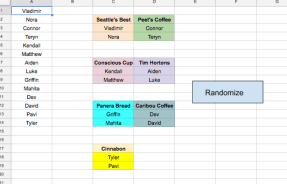
Students are then placed in groups randomly.  I’ve been using the randomizer script this year to create groups.  Using a visible random grouping strategy seems to help here.

Screen Shot 2018-05-15 at 9.16.21 PM

Students are assigned specific parts of the room to start the task.  Students are given some anchor chart paper and a bunch of markers.  Markers are used to put together a thorough response that’ll be shared with the class.  I set the Google countdown timer for 20-30 minutes and display it on the board.

I tend to listen to the discussion in each group and ask questions when needed.  I also try not to talk as much during this time.  Students create some type of rough draft on notebook paper before creating their chart.  When finished, the charts have visual models, number models, and are often messy.  I have no problem with that.  Math is and can be messy.  Students often scratch out number models that didn’t work or change units when needed.  They assign each other roles and determine the sequence for their presentation.  The presentations are no more than five minutes and includes a verbal explanation of how they found a solution.


This slideshow requires JavaScript.

After the alarms sounds students then present their findings to the class.  Part of the criteria is that all students are required to help when presenting to their peers.  Students are then given time to ask questions.  Each group presents and I hang up the charts all over the room.  I then model and review the answer with the students.  By then the class is just about finished and we’re on to the next lesson.

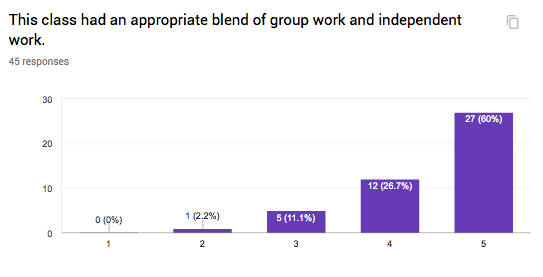
I’m finding that these types of  group activities to be great opportunities for students.  The collaboration and conversations that occur during these events are sometimes undervalued.  Students seem to be empowered to find the solution for themselves.  I provide scaffolding when needed, but I tend to let the students struggle through and find the best solution.  I find students using math vocabulary and critical thinking about the answer as they create number models and visual representations.  I’m hoping to include more of these opportunities in my planning for next school year.

Connecting and Extending Math Strategies

Screen Shot 2018-05-10 at 3.14.34 PM.png


This post has been marinating for a few weeks. I started thinking about it before NCTM and afterwards found it just as valuable.  In Late April my third grade students were exploring fractions.  This third grade group had experiences putting together and taking apart fractions earlier in the year.  They also used number lines to multiply a unit fraction by a whole number.  Students have slowly and steadily improved their confidence in being able to use fractions when completing application problems.  That’s when I came across a problem that seemed to stretch the fraction strategies that they’ve been using.

Screen Shot 2018-05-10 at 12.57.35 PM

I displayed this problem on the whiteboard.  I gave the students some time to digest the task and asked them what their first step would be.  A few students wanted to dive right in and use repeated addition to find the solution.  They thought this might be the most efficient method and what’s available in their strategy toolbox.   Other students thought that there might be a better strategy.  One students had an idea to possibly use an area model for this problem.  Curious looks came across the classroom as this particular student spoke up a bit more.  She mentioned that using a partial-products strategy could be helpful in a situation like this.  Some students agreed, while others were shaking their heads in disagreement.  For the most part, the class is very familiar with partial-products so the area model wouldn’t be a stretch.  Students also had an understanding that multiplication might be one way to tackle this problem.

I gave students time to discuss in their groups the different ways to solve the problem.  There was a lot of disagreement happening during this time.  I wanted to stop the whole class because of the noise, but the math conversations were actually really good. Students were vocal about using an area model, while some students said that they could find the answer by using a traditional method.  More students seemed confused, as this isn’t really a method that students have used with decimals.  I gave the class time to independently try out their strategy and find a solution.  Students worked on this for around five minutes.  Pictures were drawn, number lines constructed, and repeated addition was in full swing.  Some students had a correct solution, but I didn’t give an affirmation (which is crazy tough not to do).  I asked students to show a number model and most generated (5 * $1.13) + $1.39 = ?  I displayed the different strategies on the document camera.  I then asked the class if it’d be possible to use fractions to find a solution for this?  Just then, a group of students raised their hands.  They said that the 1.13 could be represented by 1 13/100 while 1.39 is equivalent for 1 39/100.  A collective whispering sound came across the classroom.  Then a bunch of hands came up from all over the room.  The class went through this strategy to find a solution.  Our number model changed a bit.

Screen Shot 2018-05-10 at 1.23.54 PM.png

The class then took the number model and used an area model.

Screen Shot 2018-05-10 at 1.28.58 PM.png

The students then added the 1  39/100 to the 5 65/100 to get 6  104/100.    Students then said that the answer is 7 and 4 hundredths.  Another students chimed in that the answer can’t just be written as a decimal and that it’s $7.04.  Students were satisfied with this method and asked if they could use it in the future.  I asked them why not?  A couple students said that they didn’t see fractions in the problem.  They saw decimals and that automatically changed the approach to a more “decimal-friendly” computation strategy. A few students replied that they didn’t think they could use it because it wasn’t taught.   Ouch.

After the class I pondered that response and thought about what is explicitly taught and what we expect students to explore and construct on their own.  Do we truly give students opportunities to discover mathematics in a way in which they can bridge strategies?  Not one student verbally called out to using a decimal to fraction conversion for this problem.  This has me wondering how explicit teachers are in empowering students to bridge strategies and concepts.  Are they given that freedom?  For example, are fraction strategies only used when students see fractions?  Is the substitution method only used when students see 1-step equations?   I believe it depends on the situation and background information also plays a role here. Having a deeper conceptual understanding of fractions and decimals might have led students to look at how the last strategy might be helpful.  Also, while an area model might be helpful now, the strategy will most likely change as a student’s math journey progresses.  Multiple strategies are beneficial for any learner, but this lesson has me asking more questions.  It was a terrific lesson and I know students were making connections.  That’s an #EduWin in my book. Next week the third grade class will be investigating angles.

Side note:  I finally submitted by components for board certification this week.  It’s a huge relief to send the files off, but now it’s a waiting game as I won’t get the scores back until December.

NCTM Reflection

Screen Shot 2018-04-29 at 10.59.53 AM

NCTM 2018 finished up yesterday.  It was a whirlwind of experiences and it has taken a while, but I feel like I’m caught up on my sleep.  Overall, it was a memorable time in DC and the weather was terrific for the most part.   In this post I’m going to put together a couple brief takeaways during each day.  Emphasis on brief, as there’s so much that happened over the past few days.

My flight arrived late Wednesday afternoon. Later that night I was fortunate enough to attend the NCTM game night.  Check out the tag for a few Tweets.  I was a bit reluctant as I was going solo, but decided to try it out anyways.  Glad I went.  I think teachers need this type of time to meet each other and build community.  I found the games intriguing and the conversations even better. Kudos to the volunteers and designers of the game night. Everyone that I encountered was welcoming and inviting. I love the idea of the Pac-Man (@ericholscher ‘s idea) tables.  This is something I’d like to bring back to my own school’s staff meetings. It was here that I met many people face-to-face that I’ve known and followed online for years.  It was great to connect and engage in conversations that extend beyond Tweets and direct messages.  There are too many to mention in this post, but it was a pleasure to meet so many inspirational people in person.

Screen Shot 2018-04-29 at 2.36.04 PM.png

Thursday was really the first day of the conference.  My hotel was about five blocks away from the conference and it was a great walk each morning.  Friday was the exception as it was raining.  I went to visit a few different sessions related to integrating math practices and technology tools.  Kudos to the presenters that also included short-links so that I can view the presentations later.  Annie shared her presentation on math tools and strategies.  I went out to the gorgeous city center for lunch.  Came back and learned about integers and the orb strategy from a group of three teachers.  By this time I had a decent understanding of where the rooms were located and how to navigate from one part of the conference to the other.  I dropped by the #MTBOS (I forgot to pack my #mtbos shirt from a few years back) booth multiple times throughout the day.  I was also able to meet my #msmathchat pals Casey and Bryan face to face.  Both are passionate educators and it was awesome to meet them in person.

Friday started off with a lot of rain.  I walked/ran to the conference center.  I attended a session on how to integrate mathematical practices better.  I also was fortunate enough to learn about Bongard problems – a new concept to me.

I didn’t get it as first, but was in rhythm after a couple practice tries.  I’m still looking for ways to integrate this into my math classes.  My presentation was at 11:30 and seemed to go well.  My only wish was that I had an extra 10-15 minutes of time.   I guess time management plays a role here.  Maybe I should apply for a full session in San Diego next year?  You can find the slides here.  During the afternoon I was able to learn more about math practices and attended a middle school Desmos session on equations and paper cups.  It was here that I actually learned how to use Desmos for the first time.  I’ve tinkered a bit with it this year and have used it for lessons, but found application potential at this session.  I closed out the day with a session on a partnership between the University of Delaware and a geometry lesson study.  It was interesting to hear how the university partnered with the local school districts in designing a lesson study.  Afterwards, I went out to meet some friends for dinner.


It was a good trip and worth the sub plans.  Excellent to meet many of my pln in person.  These people are truly changing math classrooms for the better.  There are still some people that I wanted to meet, but didn’t get an opportunity to do so.  Time was limited and so were the sessions.  Maybe next time. The people at this conference are inspiring.  Many of the presenters are still in the classroom or working with schools and I’m encouraged to see the work that they’re accomplishing and willing to share with the math community.  I’m looking forward to finishing off the school year strong.

SaveSave

Which One Doesn’t Belong – Fraction Edition

Screen Shot 2018-04-20 at 7.03.27 PM.png

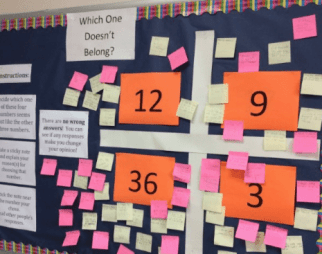
My classes have been using a WODB board this year.  The board has been a permanent fixture in my room and it has been up since August.  I came across the idea last year after reading Christopher’s idea and Joel’s example.  I’m finding that it has been a great routine for my 3-5th grade math students.  My goal was to change my WODB bulletin board every  week, but it’s really being changed around 2-3 weeks or so.  My boards started out as mainly shapes, but has moved to numbers and equations recently. Changing it less gives kids time to see other options and add more notes.

Screen Shot 2018-04-20 at 7.12.44 PM.png

My third grade students are in the middle of a unit on fractions.  They used number lines to multiply fractions by whole numbers earlier in the week.  The students are becoming better at multiplying fractions using visual models, although some are more wanting to multiply the numerators and denominators.

Today, the students completed an individual Which One Doesn’t Belong task.  I’ve heard of other classes doing something similar, so I thought it might work well with my kids. Students were given a criteria for success page and then asked a bunch of questions.

Screen Shot 2018-04-20 at 7.09.40 PM

Students were asked to create four different fraction multiplication models.  Students then created two different solutions for the WODB prompt.  After a brief amount of modeling, students started to create their own WODB boards.  Many students had questions about what could count for solutions?  I put it back on the students to figure out if their solutions were appropriate or not. For the most part, students did a fine job finding two different solutions.

Screen Shot 2018-04-20 at 7.07.34 PM.png

Students then wrote down their solutions and folded the paper to hide them.

Screen Shot 2018-04-20 at 7.11.05 PM

The students took pictures and put them in their SeeSaw accounts.  Next week, the kids will look at each others’ responses and see if their solutions match. I’m looking forward to what they observe.

Fractions and Fruit Salad

Screen Shot 2018-04-17 at 9.43.33 AM.png

My third graders have been studying fractions for the past few weeks.  Last week, students represented fractions as multiples of a unit fraction.  In one of the lessons they  broke apart 4/5 into four 1/5 pieces.  They used number lines to show all the different unit fraction pieces.

Afterwards, students represented fraction as multiples of a unit fraction.  They showed how addition equations and multiplication equations are related.  Students reviewed how repeated addition is similar to multplication. Students are becoming better at understanding how to multiply a whole number by a fraction and show the progression on a number line.  I had some students want to jump to multiplying the numerators and denominators , but these students had trouble when explaining why they used that process.

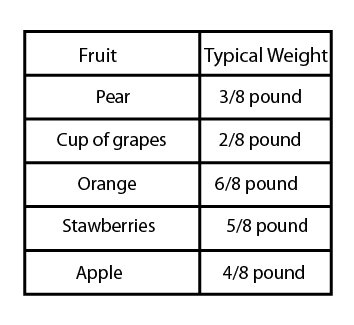
The next task really seemed to stretch their thinking.  It also showed me how well students grasped the idea of combining fractions with similar denominators.  The students were asked to create a three-fruit salad.  They were given fruit and the typical weight for each item.  Students needed to combine three of the fruits to total exactly five pounds.

Screen Shot 2018-04-17 at 9.33.36 AM.png

Students needed to create two different recipes for this task. Students needed to also show how they combined the fruits withe  a visual model and display a number model.  For the most part, students were able to combine the fruit accordingly.  An interesting tidbit was that many of them overemphasized one fruit over another.  For example, I had a few students that took 16 cups of grapes to get a total of four pounds.  Then they just found two items that totaled one pound.  I asked the students what those types of fruit salads would taste like.  They didn’t have a response, so I’m assuming we’ll have to look at the context a bit more next time.  This could also be used for a ratio/proportion lesson somewhere down the road.

Later on in the week, I gave a similar task related to a four-fruit salad with a weight of exactly six pounds.  This time the weights weren’t unit fractions.

Screen Shot 2018-04-17 at 9.39.58 AM

Students first noticed the strawberries 7/8 weight.  A few students were pretty sure that the 7/8 might not be compatible with the rest of the fractions.  Others disagreed with this idea and said that the 1/3 didn’t fit.  Students worked out this task and needed some help along the way.  Students moved towards creating just number models, as some decided to not go the visual model route.  Overall, I’m impressed with how they tackled this problem.  We’ll be discussing it tomorrow afternoon.

Polygon Hierarchy

Screen Shot 2018-04-09 at 6.48.02 PM

My fourth grade class has been exploring geometry and polygons.  They’ve been comparing polygons and looking closely at how to classify them.  Students are familiar with these shapes and can classify them by their looks. Students were confident early in the week as they were able to label polygons based on side length, angles, and sides.  Things started to change when the word hierarchy was introduced.  The word is new to most of my students so the class first reviewed the term.

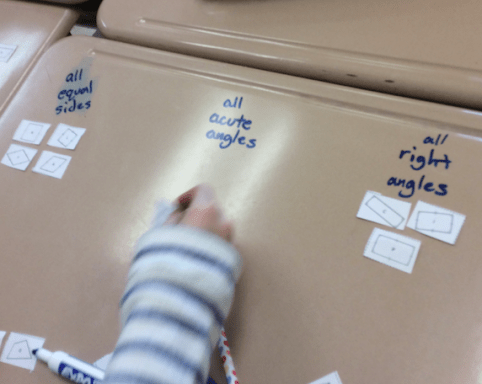
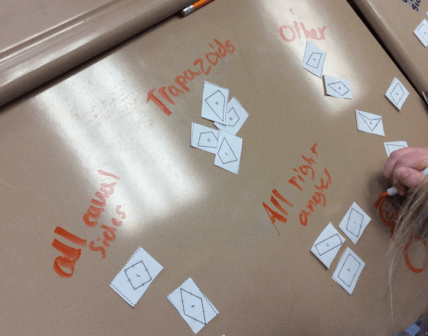
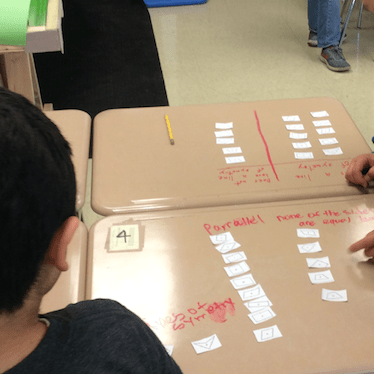
Students were then given a paper full of shapes.  They cut out the shapes and used their desk to classify them.  Students classified the shapes according to their attributes.  Some students sorted the polygons by angle size, while others used symmetry or side length.

Screen Shot 2018-04-09 at 6.47.51 PM.png

Students were finished in about ten minutes.  The class took a gallery walk and reviewed all the other ideas.  Students discussed which polygons met or didn’t meet the category title.  Students then went back to their seats and reviewed the term hierarchy again.

Screen Shot 2018-04-09 at 6.48.10 PM.png

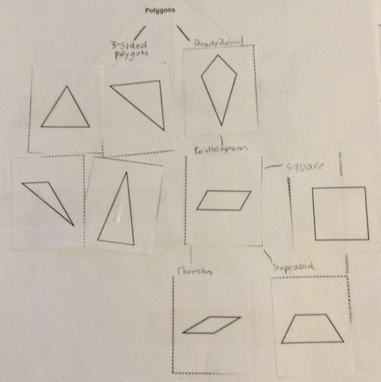
The class took the cards and taped/glued them to make their own hierarchy.  Students are starting to see the characteristics of polygons in a different light.  This is good news as later on in the year students will use polygon characteristics to find area measurements.  They’ll also be transforming the polygons on a grid in about a month.

Screen Shot 2018-04-09 at 6.48.45 PM

I’m looking forward to the polygon discussion tomorrow.


Side note:  This is my 300th post.  I had no idea that I’d be writing so much over the years, but it’s been an amazing journey.

Math Error Analysis

Screen Shot 2018-03-27 at 1.15.45 PM

My third grade class finished up a cumulative assessment last week.  This particular assignment was completed independently and covered skills from January – March. The assignment spanned the last two units of study and reviewed topic of factors, multiples, composite/prime numbers, area, fractions, decimals, measurement conversions, using standard algorithms, and angles.  There was a hefty amount of content found in fairly large assignment.  It took around two classes to complete the task.

It’s my personal belief that an assessment should be worthwhile to the student and the teacher.  Why take the time to give the assessment in the first place??  Well …. don’t answer that – especially when state standardized testing is right around the corner.  : ) There are some assessments that teachers are required to give and others that are more optional.

My assessment for learning belief stems from past experiences that weren’t so thrilling.  I remember being given a graded test and then immediately moving on to the next topic of study.  There wasn’t a review of the test or even feedback.  A large letter grade (usually in a big red marker) was on the front and that was that. This left me salty.  All teachers were students at some point and this memory has stuck with me.

I like to have students review their results and take a deeper look into what they understand.  In reality the assessment should be formative and the experience is one stop along their math journey.  It should be a worthwhile event. It’s either a wasted opportunity or a time slot where students can analyze their results, use feedback, and make it more of a meaningful experience.

So back on track … These third graders took the cumulative assessment last week.  I graded them around mid-week and started to notice a few trends.  Certain problems were generally correct, while others were very troublesome for students.  Take a look at my chicken-scratch below.

Screen Shot 2018-03-27 at 1.03.36 PM

As you can tell, problems 2, 4, 8, 11 and 22 didn’t fare well.  It seemed that problems 3, 17, 18, and 21 didn’t have too many issues.  My first thought was that I might not have reviewed those concepts as much as I should have.  There are so many variables at play here that I can’t cut the poor performance on a particular question down to one reason. That doesn’t mean I can’t play detective though. My second thought revolved around the idea that directions might have been skimmed over or students weren’t quite sure what was being asked.  So, I took a closer look at the questions that were more problematic.  I looked in my highlighter stash and took out a yellow and pink.  I highlighted the problems that were more problematic pink.  Yellow was given to the problems that were more correct.

Screen Shot 2018-03-27 at 1.24.40 PM.png

The next day I was able to review the assessment results with the class.  I gave back the test to the students and reviewed my teacher copy with the pink and yellow with the class.  I used the document camera and made a pitstop each pink and yellow highlight and asked students what types of misconceptions could possibly exist when answering that particular question.  I was then able to offer feedback to the class.  For example, one of the directions asked students to record to multiplicative comparison statements. Many students created number models, but didn’t use statements.

Screen Shot 2018-03-27 at 1.01.36 PM.png

Students also mixed up factors and multiples

Screen Shot 2018-03-27 at 1.01.54 PM.png

Many students forgot to include 81 in the factor pair and thought they didn’t have to include it since it was in the directions.  Hmmmm…. not sure about that one.

Some of the problems required reteaching.  I thought that was  great opportunity to readdress a specific skill, but I could tell that it was more than just a silly mistake.  I think the default for students is to say that 1.) they were rushing or 2.) it was a silly mistake.  Sometimes it’s neither.  I had a mini lesson on measurement conversions.

Screen Shot 2018-03-27 at 1.02.03 PM.png

I also reviewed how to use the standard algorithm to add and subtract larger numbers.  Some students had trouble lining up the numbers or forgot to regroup as needed.

Screen Shot 2018-03-27 at 1.02.12 PM.png

I offered up some graph paper to students that needed to keep their work organized.

After the review, which took about 10-15 minutes, I gave students a second opportunity to retake the problems that were incorrect the first time around.  I ended up grading the second attempts and was excited as students made a decent amount of progress.  The majority of pink highlighted problems from earlier were correct on the second attempt.  #Eduwin! The feedback and error analysis time seemed to help clarify the directions and ended up being a valuable use of time.  I’m considering using sometime similar for the next cumulative assessment, which will most likely occur around May.

Now, I don’t use this method for all of assessments.  My third grade class has eight unit assessments a year.  After each assessment I tend to have students analyze their test performance in relation to the math standard that’s expected.  Students reflect and observe which particular math skills need bolstering and set goals based on those results.  There’s a progress monitoring piece involved as students refer back to these goals during there next unit.


Side note: I had trouble finding a title for this post.  I was debating between misconception analysis and assessment analysis.  Both seemed decent, but didn’t really reflect the post.  So I tried something different – I wrote the post and then created the title.  I feel like error analysis fits a bit more as the errors that were made weren’t necessarily misconceptions.  Also, this post has me thinking of problematic test questions.  That could be an entirely different post.